




Families in Transition: Living Arrangements, Intergeneration Support, and Subjective Wellbeing in 21st Century China
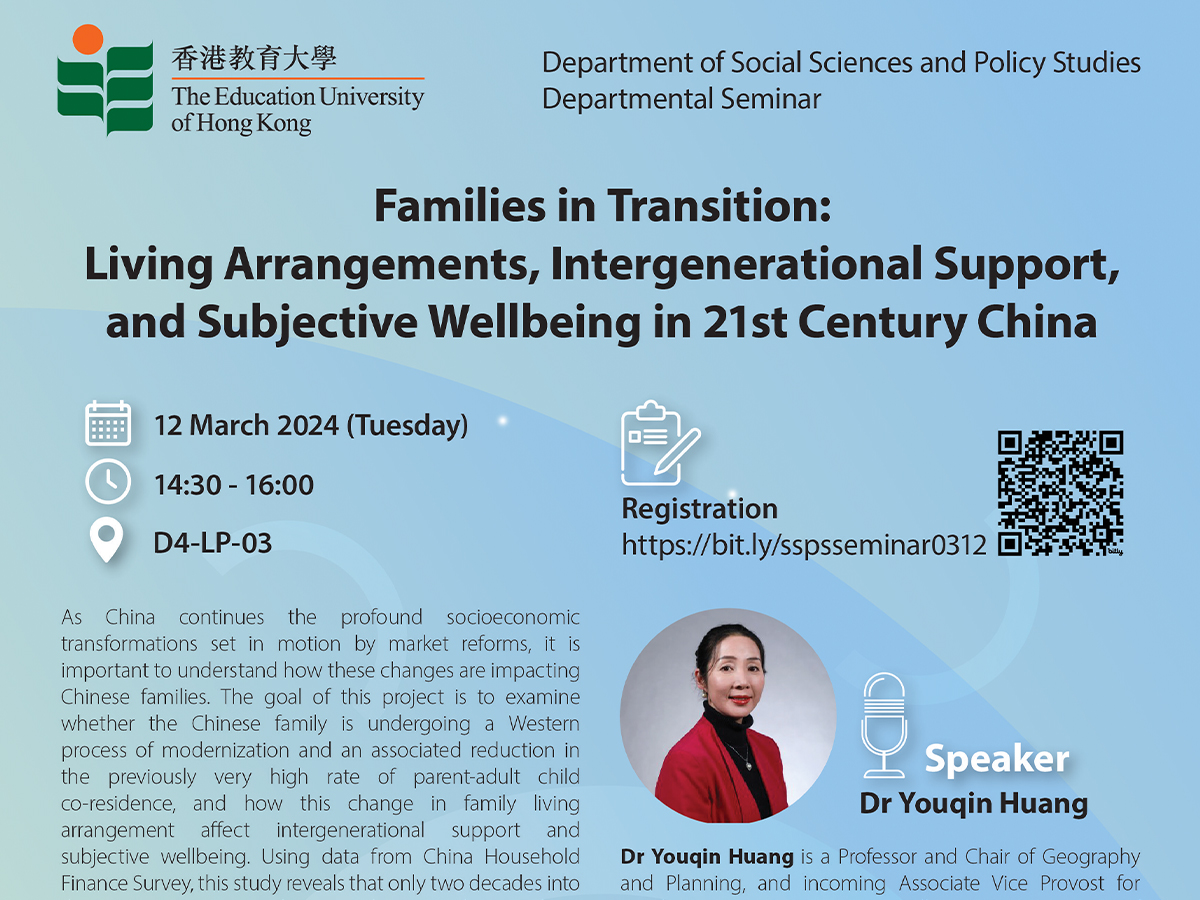
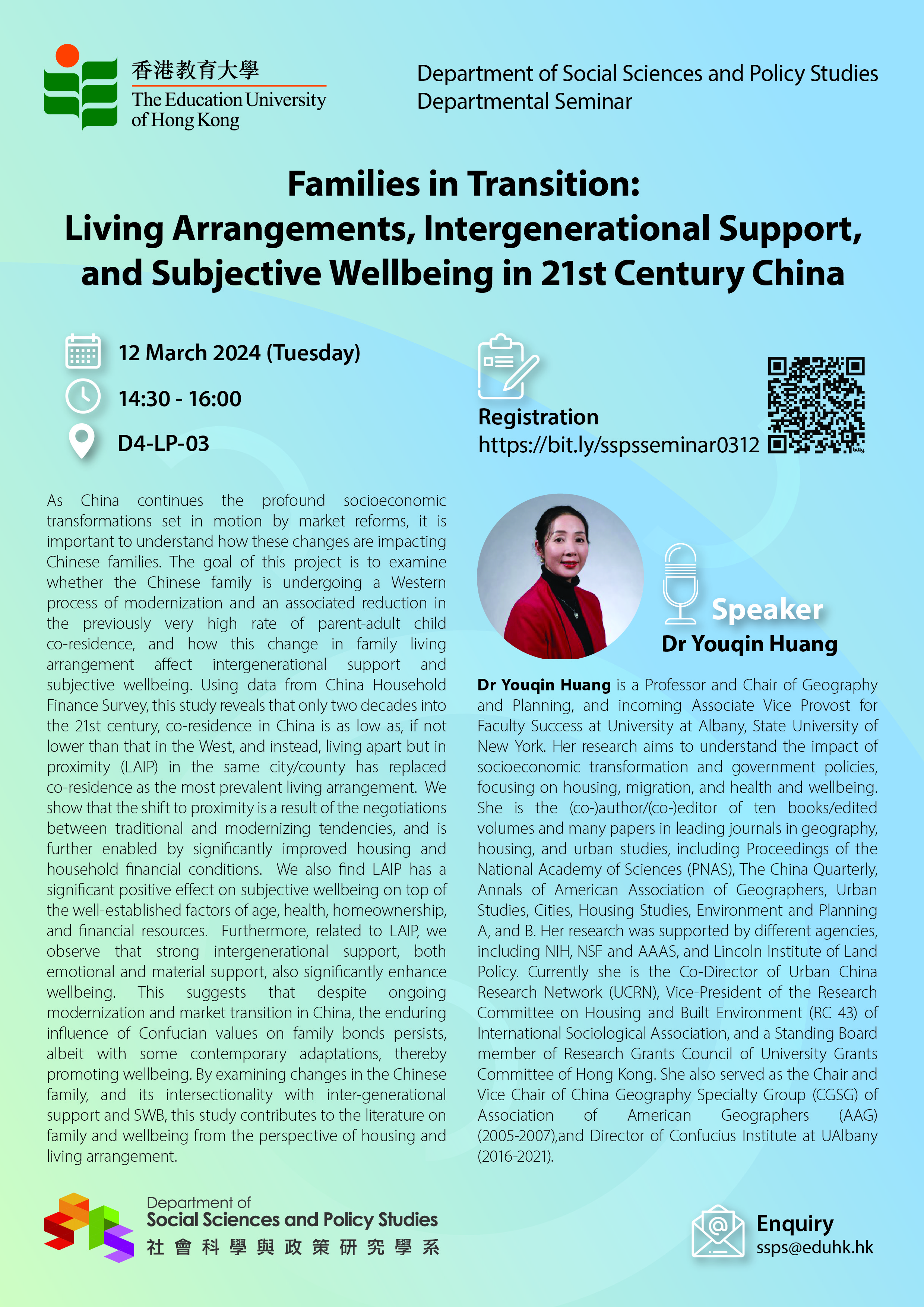
You are cordially invited to join the departmental seminar on “Families in Transition: Living Arrangements, Intergenerational Support, and Subjective Wellbeing in 21st Century China” organised by the Department of Social Sciences and Policy Studies. Details are as follows:
|
Title |
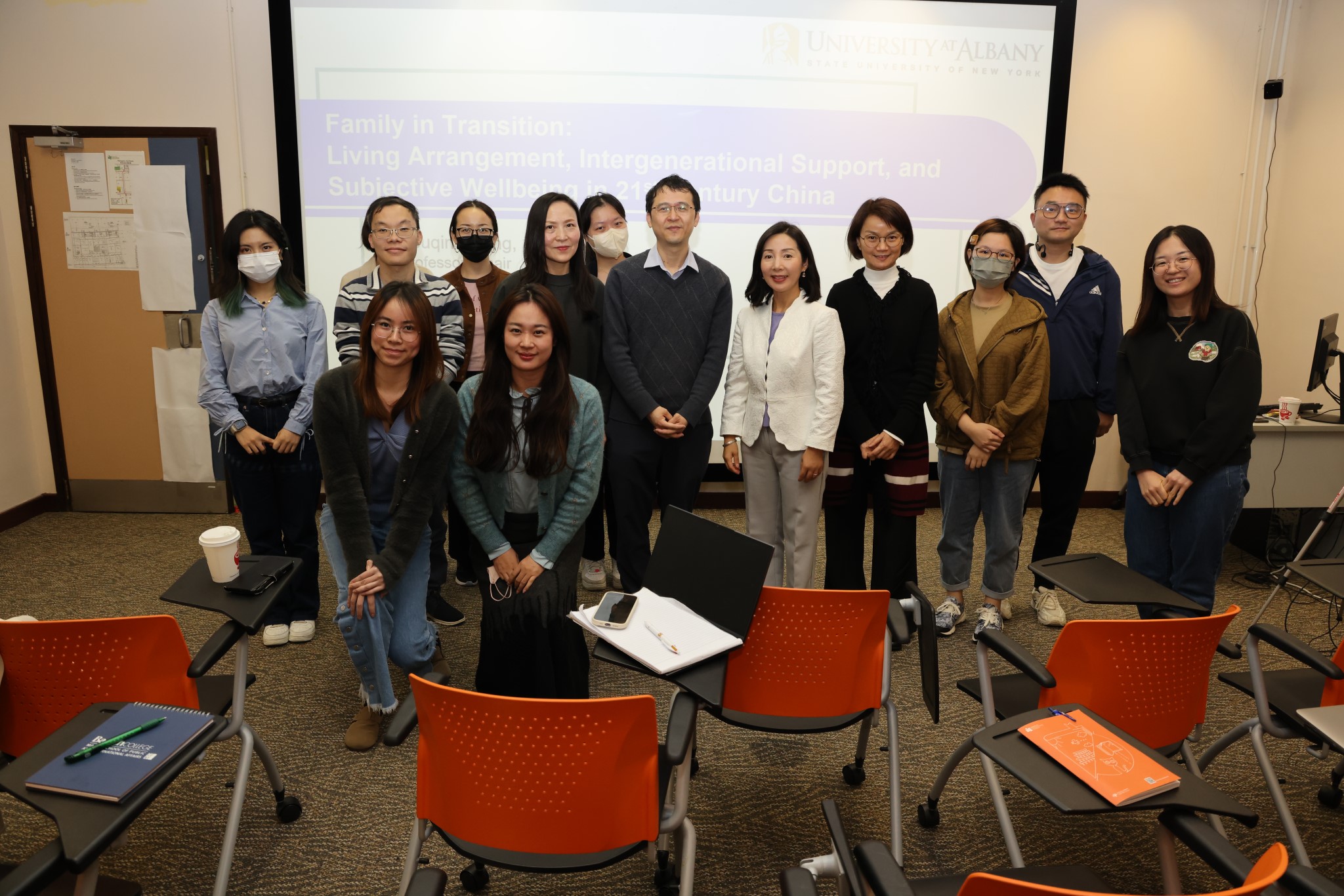
Families in Transition: Living Arrangements, Intergenerational Support, and Subjective Wellbeing in 21st Century China |
|
Date |
12 March 2024 (Tuesday) |
|
Time |
14:30 – 16:00 |
|
Venue |
D4-LP-03 |
|
Abstract |
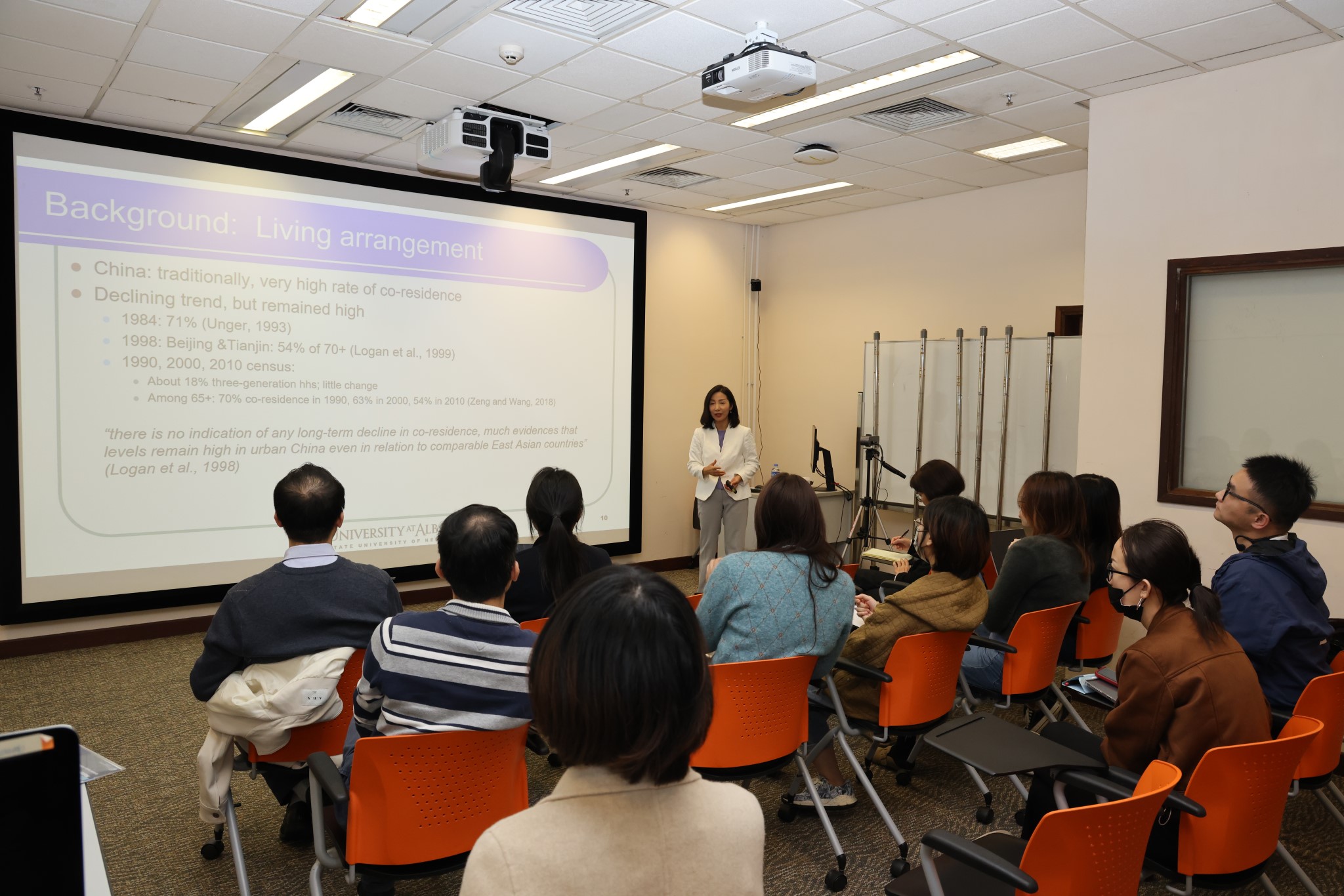
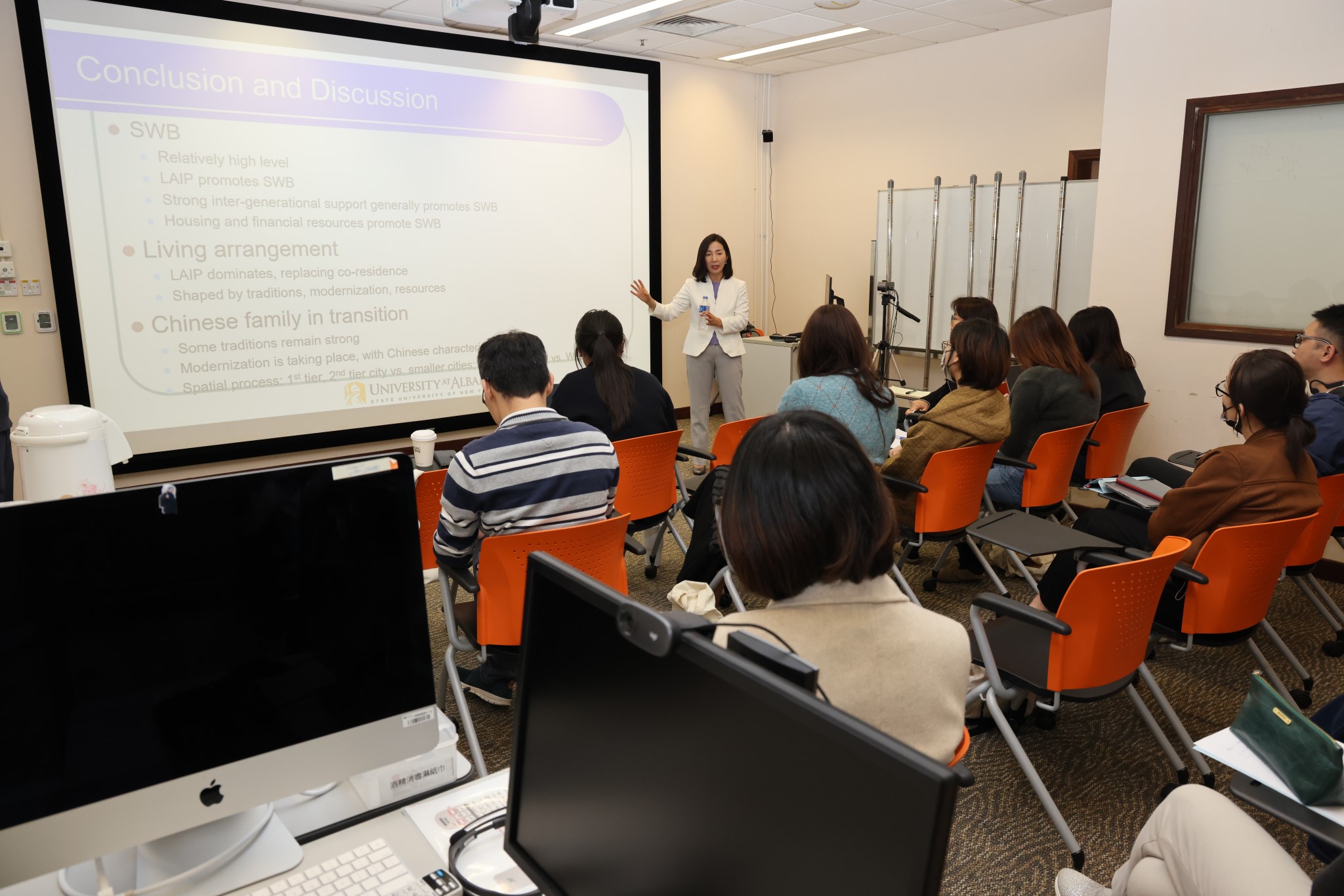
As China continues the profound socioeconomic transformations set in motion by market reforms, it is important to understand how these changes are impacting Chinese families. The goal of this project is to examine whether the Chinese family is undergoing a Western process of modernization and an associated reduction in the previously very high rate of parent-adult child co-residence, and how this change in family living arrangement affect intergenerational support and subjective wellbeing. Using data from China Household Finance Survey, this study reveals that only two decades into the 21st century, co-residence in China is as low as, if not lower than that in the West, and instead, living apart but in proximity (LAIP) in the same city/county has replaced co-residence as the most prevalent living arrangement. We show that the shift to proximity is a result of the negotiations between traditional and modernizing tendencies, and is further enabled by significantly improved housing and household financial conditions. We also find LAIP has a significant positive effect on subjective wellbeing on top of the well-established factors of age, health, homeownership, and financial resources. Furthermore, related to LAIP, we observe that strong intergenerational support, both emotional and material support, also significantly enhance wellbeing. This suggests that despite ongoing modernization and market transition in China, the enduring influence of Confucian values on family bonds persists, albeit with some contemporary adaptations, thereby promoting wellbeing. By examining changes in the Chinese family, and its intersectionality with inter-generational support and SWB, this study contributes to the literature on family and wellbeing from the perspective of housing and living arrangement. |
|
Speaker |
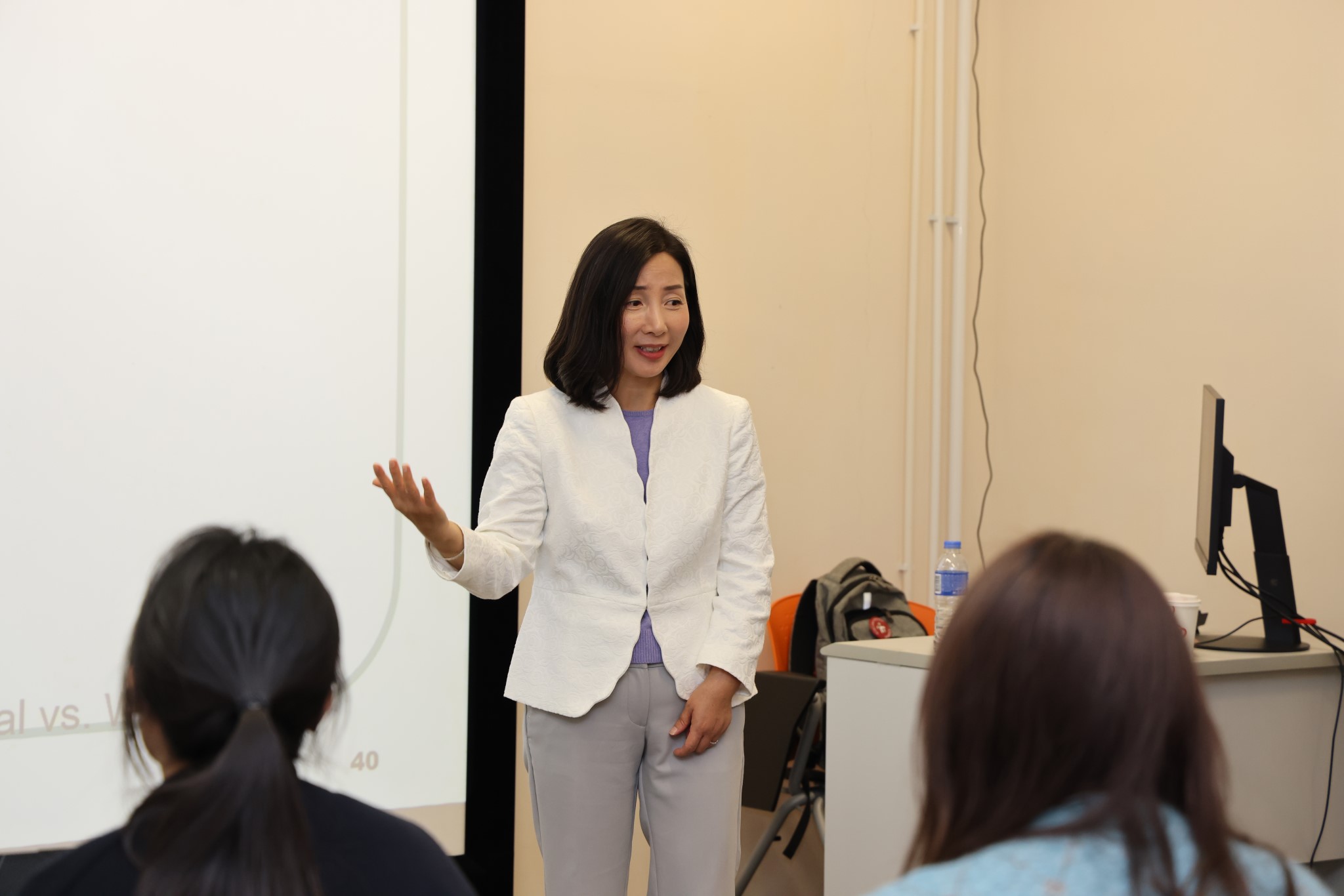
Dr. Youqin Huang is a Professor and Chair of Geography and Planning, and incoming Associate Vice Provost for Faculty Success at University at Albany, State University of New York. Her research aims to understand the impact of socioeconomic transformation and government policies, focusing on housing, migration, and health and wellbeing. She is the (co-)author/(co-)editor of ten books/edited volumes and many papers in leading journals in geography, housing, and urban studies, including Proceedings of the National Academy of Sciences (PNAS), The China Quarterly, Annals of American Association of Geographers, Urban Studies, Cities, Housing Studies, Environment and Planning A, and B. Her research was supported by different agencies, including NIH, NSF and AAAS, and Lincoln Institute of Land Policy. Currently she is the Co-Director of Urban China Research Network (UCRN), Vice-President of the Research Committee on Housing and Built Environment (RC 43) of International Sociological Association, and a Standing Board member of Research Grants Council of University Grants Committee of Hong Kong. She also served as the Chair and Vice Chair of China Geography Specialty Group (CGSG) of Association of American Geographers (AAG) (2005-2007),and Director of Confucius Institute at UAlbany (2016-2021). |
|
Registration |
Should you have any questions, please contact us at ssps@eduhk.hk.
We look forward to seeing you in the seminar.