
Bachelor of Education (Honours) (Geography)
The programme aims at training pre-service teachers who will be able to teach Geography curriculum in the secondary schools.

On successful completion of the programme, students will be able to:

  • demonstrate a solid understanding and command of geographical concepts and theories and apply the knowledge to solve geographical problems in the local, regional and global contexts with complex human-physical interface;
  • develop learning capability to be a competent and effective learner and teacher in a dynamic and an ever-changing society;
  • apply critical thinking to analyse the geographical and environmental issues that address the relationship among land, nature and people in the physical and human environments;
  • demonstrate the pedagogical literacy and competency required for the development and implementation of curriculum in secondary schools; and
  • develop essential abilities to plan, execute, report on field work and geographical research with the skills of data analysis, Geographic Information System, remote sensing and field studies.


Domain Credit Points (cps)

Major

  • Major
  • Cross-Faculty Core Course
  • Major Interdisciplinary Course

39

(33)
(3)
(3)

Education Studies

  • Education Studies Core
  • Pedagogy for Major

30

(24)
(6)

General Education

22

Final Year Project (Honours Project / Capstone Project)

6

Electives (including Free Electives, Minor or Second Major)

30

Field Experience

20

Language Enhancement

9

Total:

156

Note:
(1) Classes will be held in Tai Po Campus and Tseung Kwan O Study Centre / North Point Study Centre / Kowloon Tong Satellite Study Centre / Sports Centre as decided by the University.
(2) Students admitted into this programme starting from the 2023/24 cohort are required to visit the Greater Bay Area (GBA) and/or other parts of Mainland China. Programme may also require students to participate in other non-local learning experience for completion of the programme. While the visits are heavily subsidised, students are still required to contribute part of the estimated cost of the visits ("student contribution"), whereas personal entertainment, meals expenses, travel document fee and personal insurance costs will not be supported. The estimated cost of the visits for students admitted to the 2024/25 cohort is not available yet as it is subject to a variety of factors such as changes to the cost of the visits as a result of inflation, trip duration, traveling expenses, the exchange rate, etc. The exact amount of student contribution is thus not available.
(3) Students admitted into this programme are required to join a compulsory overseas residential field study and contribute at least 18% of the estimated cost of the trip in order to complete the programme.
(4) Starting from the 2024/25 cohort, students admitted to the full-time Bachelor of Education and Double Degree programmes are required to fulfil the “Exit Requirements for Teachers’ Professional Conduct and Ethics”, which consists of three components: 1) Fulfilment of assessment requirements of Field Experience; 2) Satisfactory completion of two required courses related to Teachers’ Professional Conduct and Ethics; 3) Fulfilment of relevant co-curricular requirement.

Major

The Geography Major is aligned with the existing geography curriculum of secondary education, which integrates the robust pedagogical training into the solid geographical content. The Major equips students with essential skills in geography teaching, such as Geographic Information System (GIS) and field work, which will enhance graduates’ ability in guiding field trips and applying the GIS in their teaching career. Major courses cover both physical and human geography topics that allow students to have a balanced geographical knowledge for teaching geography in senior and junior forms at secondary schools effectively.

The Cross-Faculty Core Course (CFCC) will comprise 3 individual components with 1 credit point each and separately assessed with the aim to widen students’ horizon and look beyond Hong Kong. In Component I, lectures with topics related to Basic Law / National Security will be arranged; in Component II, students will have the opportunities to undertake visits in Greater Bay Area; in Component III, a variety of themes which are linked to the University’s development niche areas will be offered by Faculties.

Education Studies

Education Studies gives students the chance to study teaching and learning from an interdisciplinary perspective. Students will study early childhood/school education from psychological, sociological, philosophical, pedagogical and other perspectives. Students will develop a range of skills necessary for professional practice, such as problem solving, critical thinking, creativity, communication, social interaction, ethical decision making and global perspectives. Education Studies helps students appreciate the importance of professional excellence, ethical responsibility and innovation to the role of a teacher. We aim for our graduates to become beginning teachers who are caring and competent, intellectually enthusiastic, socially committed, and globally aware.

General Education

The EdUHK’s General Education programme prepares students to be active agents of change, by broadening their intellectual horizons, helping them make connections among different areas of knowledge and between their formal studies and life outside the classroom, and strengthening their capacity for sound thinking and good judgement. It offers a varied but balanced mix of individual courses across a range of subject areas and disciplines, set within an integrated structure of (i) General Education Foundation Course, (ii) General Education Breadth Courses, (iii) Experiential Learning, and (iv) University ePortfolio with a total of 22 credit points (cps).

  1. General Education Foundation Course (4 cps)
    General Education Foundation Course (GEFC) is a 4-cp course that will run for the whole academic year, and be taken by all first-year students at EdUHK. This course will equip students with the diverse knowledge-bases and skills for their intellectual and professional development in local, national and global contexts. In Semester 1, there will be a series of lectures and/or workshops on selected themes and topics (e.g. University life planning, research and inquiry, financial economy, Basic Law and national security etc.,). In Semester 2, students will be introduced to a wide variety of themes and issues in general education (e.g. language, well-being, entrepreneurship, conservation, professionalism and professional ethics etc.,) by taking part in the lectures delivered by Chair Professors / Professors and external Guest Lecturers. These lectures are substantiated by small class tutorials for building communities of dialogue and inquiry that foster the intellectual growth of students as reflective thinkers deliberating issues of importance to their own lives, society and the world as a whole.
    In addition to the face-to-face lectures, video lectures will be arranged as appropriate to allow students to learn flexibly at their own pace. As a unique feature of the course, e-Learning assessments and a reflective entry of their learning experiences will be submitted by students after lectures and become an important part of the e-Portfolio. The online learning activities and tasks will encourage students to reflect and think critically on various themes and issues based on learning artefacts and experiences, thereby, charting the paths for their personal, intellectual and professional developments.

  2. General Education Breadth Courses (9 cps)
    The General Education Breadth Courses (GEBCs) (9 cps) are composed of General Education Learning Strand (New Six Arts (2+1 cps)) Course, Positive and Values Education (PAVE) Course (3 cps) and General Education Interdisciplinary Course (GEIC) (3 cps). Students have to take one from each of the components in order to fulfill the GEBCs requirement.
    Students are allowed to take GELS (New Six Arts Course(s)) and/or PAVE Course(s) after the completion of GEFC or concurrently with GEFC in Year 1 Semester 2 if they are interested and their curriculum schedules allow. After the completion of any GELS (New Six Arts)/PAVE Course, students are allowed to take the GEIC (Level 4) from Year 2 Semester 2 to Year 3 Semester 1, in order to enable them to appreciate the complexity of issues and problems that transcend disciplinary boundaries and to make sense of them through dialogues across disciplines.

  3. Experiential Learning (6 cps)
    Experiential Learning (EL) consists of Co-curricular and Service Learning Course (CSLC) and Experiential Learning Course (ELC). CSLC provides students with an opportunity to engage in learning in action and through action in real-life or work-place context while complementing, connecting with, and mirroring their learning experiences derived from formal curriculum. On the other hand, ELC encourages students to learn through experimentation, observation, reflection and (re-)conceptualization while undertaking a wide variety of activities, such as creative work, student-initiated enterprise/projects, thematic overseas trips, outward-bound training, etc.
    Students are required to take at least one CSLC and one ELC starting from Year 1 (3 cps each). Courses in EL domain can be taken in parallel with Block Practice (BP) I and II (i.e. Field Experience and Experiential Learning Semesters). If that is the case, students need to ensure the course schedule does not clash with BP (students should check the information listed under the course outline and explore the feasibility with course tutors at the beginning of the semester). Students are encouraged to complete courses in EL domain before semester 1 of final year as they will be engaged in BP II and data collection/field work of Final Year Project in this Semester. Careful academic planning on personal basis is needed.

  4. University ePortfolio (3 cps)
    University ePortfolio is a 3-cp “capstone” course which requires students, when they are approaching the end of their undergraduate studies, to reflect critically on their learning experience within General Education in their disciplinary, professional and co-curricular studies, as well as in their lives beyond graduation, and, to develop an integrated view of how and where they position themselves with respect to their future goals, plans, and aspirations. Students will prepare and submit an annotated University ePortfolio based on their experiences, reflections and stored artefacts from their undergraduate studies. Students are encouraged to keep electronic (soft) copies of all their coursework material starting with the completion of the GEFC for potential inclusion in the University ePortfolio.
    The course will enable students to synthesise their learning experiences, by reflecting critically on the value and significance of what they have learned, making connections to their lives, and imagining their own futures.
    Students are allowed to take the University ePortfolio course after completion of all the GEBCs required (i.e. GELS (New Six Arts), PAVE, GEIC). Also, they have to take the course in the semester of study assigned by individual programmes.

For detailed information and the course synopsis about General Education courses, please visit the website at www.eduhk.hk/geo.

Final Year Project (Honours Project / Capstone Project)

The Final Year Project comprises of two courses:

• Honours Project I / Capstone Project I: Research Methods and Proposal

• Honours Project II / Capstone Project II: A one-year project usually to be conducted in the final year.

Electives

Students can choose either one of the following options:

  1. Free electives
  2. 1 Minor plus electives
  3. 2 Minors
  4. Second Major

Field Experience

Students will be placed in schools which are important sites for learning to teach and where they will interpret, generate, interact and experiment with theory:

Year 2 Semester 1 & 2

Attend an introduction (FE Foundation Course with 3 cps) to the teaching profession. Students will be guided and supported by a Professional FE Tutor to understand the roles and expectations of a teacher and build their own professional identity and mission, whilst adapting to the changing role from a student to a professional teacher.

Year 3 Semester 2

Conduct Block Practice I in schools (5 cps) for 8 weeks, accompanied by the taught course of FE and Professional Learning Portfolio I (2 cps) in small-group tutorials that support students’ active engagement in the Field Experience, and help them connect theory and practice. Through group and individual guidance, students will produce an e-portfolio which is a collection of evidence of their learning, to support reflection and professional growth.

Year 5 Semester 1

Conduct Block Practice II in schools (7 cps) for 8 weeks, accompanied by the taught course of FE and Professional Learning Portfolio II (3 cps) in small-group tutorials and individual guidance that enhance students’ understanding of the role of teachers and maintaining a teaching profession of ethical standards in schools, as well as assuming the role of a caring cultivator, an inspirational co-constructor and a committed role model for students. They will further develop their e-portfolio for summative reflection with records of their professional development and to be examined in an exit panel interview. *

Block Practice will be conducted in local schools where the medium of instruction may vary depending on the policy of the schools. Students should be able to demonstrate a proficient level of Cantonese / English / Putonghua (for Chinese Language teaching in some schools) to conduct Block Practice.

Students should observe the University’s  General Code of Student Conduct and the professional conduct and behavior required of teachers. Placement schools and/or invited educators from local schools will observe students’ performance during block practices and exit panel interviews, and their feedback will be considered in determining the final result of the students’ field experience.* 

* subject to approval

Note: The University will ask students of our full-time teacher education programmes (e.g. Bachelor of Education programmes) to declare whether they have been convicted of or are being prosecuted for any sex-related offence in Hong Kong or elsewhere, and to provide relevant details prior to undertaking teaching practice. Such information may be released to their placement schools. The University reserves the right not to allow these students to attend the block teaching practice. If so, they won't be able to meet the graduation requirements of the programmes.

Language Enhancement

From September 2012-13, FT BEd non-language-major students will be required to meet Language Exit Requirements (LERs) for English and Putonghua. The exit benchmarks are IELTS 6.0 (or equivalent) for English, and PSC (Putonghua Shuiping Ceshi) 3B for Putonghua. Students are required to study a comprehensive package of English, Chinese and Putonghua enhancement courses.

English Enhancement Programme (EEP) consists of two credit-bearing and two non-credit-bearing courses from Year 1 to Year 3. The four mandatory courses aim to equip students with academic literacy essential to their study at tertiary level and help them develop general English language proficiency. They will also lay the foundation for students to learn English independently in subsequent years through participation in self-access learning activities, blended learning, and optional language enhancement courses appropriate to their level and developmental needs. Optional IELTS preparation workshops will also be offered to familiarize students with the EdUHK-sponsored IELTS after they have completed the EEP.

Chinese Enhancement Programme (CEP) consists of one mandatory credit-bearing course and two mandatory non-credit-bearing courses, which provide students with the input on Chinese language skills as well as elements of literature and culture.

Students may be exempted from selected Chinese course in the package if they have fulfilled the exemption criteria of individual course.

Putonghua Enhancement Programme (PEP) Students need to take two mandatory non-credit-bearing courses if they have not fulfilled the exemption criteria via the Tertiary Putonghua Test (TPT) or PSC. They could opt for other non-credit-bearing courses in year two.

Cantonese Enhancement Courses (For non-Cantonese-speaking Chinese students) Non-Cantonese-speaking Chinese students will be required to study two non-credit-bearing Cantonese courses. The successful completion of the Cantonese courses will be recorded in the student's transcript.

For Cantonese, Putonghua and English, language consultation services and other self-access materials are provided at ASLLC, the self-access language learning centre (these arrangements are subject to changes).

  Course Title Course Code & Outline
Major courses for BEd(GEOG)

Foundation of Physical Geography#

GGP1001

Understanding Cultural and Human Geography#

GGP1002

Spatial Data Analysis and GIS#

 GGP2020

Globalizing China: The People and Development#

 GGP2021

Climate Change and Global Warming#

GGP3008

Economic Geography#

GGP3009

Global Environmental Issues#

 GGP3022

Conservation and Management of Natural Resources#

 GGP3023

Geomorphology and Hydrology#

 GGP4010

Urbanization and Transportation: Theory and Policy#

 GGP4011

Tourism and Sustainability#

GGP4012

Natural Hazards#

 GGP4025
Pedagogy courses for BEd(GEOG)

Field Methods and Teaching in Geography*

 GGP3024

Pedagogy in Geographical Education*

 GGP3014
Cross-Faculty Core Course

Component II – Visits in Greater Bay Area

 CFB3010

#To take Geography as Second Major, students can choose any 10 courses.
* Pedagogy for Major course under Education Studies

Every effort has been made to ensure that information contained in this website is correct. Changes to any aspects of the programmes may be made from time to time due to unforeseeable circumstances beyond our control and the University reserves the right to make amendments to any information contained in this website without prior notice. The University accepts no liability for any loss or damage arising from any use or misuse of or reliance on any information contained in this website.

Any aspect of the course and course offerings (including, without limitation, the content of the course and the manner in which the course is taught) may be subject to change at any time at the sole discretion of the University. Without limiting the right of the University to amend the course and its course offerings, it is envisaged that changes may be required due to factors such as staffing, enrolment levels, logistical arrangements, curriculum changes, and other factors caused by unforeseeable circumstances. Tuition fees, once paid, are non-refundable.

EdUHK is one of the teacher education providers in Hong Kong. Graduates of the University’s teacher education programmes are eligible to apply to become fully qualified and registered teachers. As regards teacher registration, graduates should approach the Teacher Registration Team of the Education Bureau (EDB) to submit applications directly. All applications will be assessed by the EDB which will consider, among other things, whether an applicant has been convicted of any criminal offence (including sex-related offences) in Hong Kong or elsewhere, or is involved in any ongoing criminal proceedings or investigations. For details, please browse the EDB's website.

In-depth academic and professional knowledge confer graduates of the programme with excellent career prospects. They will possess a Qualified Teacher Status in Hong Kong and are ready to become fully qualified teachers in local secondary schools. In addition to the professional teaching career, graduates will possess the academic knowledge and intellectual skills to embark on a wide variety of other relevant jobs in the government sector, green non-government organisations, commercial organisations, environmental consultancies, etc.


Disclaimer
Every effort has been made to ensure that information contained in this website is correct. Changes to any aspects of the programmes may be made from time to time due to unforeseeable circumstances beyond our control and the University reserves the right to make amendments to any information contained in this website without prior notice. The University accepts no liability for any loss or damage arising from any use or misuse of or reliance on any information contained in this website.

Any aspect of the course and course offerings (including, without limitation, the content of the course and the manner in which the course is taught) may be subject to change at any time at the sole discretion of the University. Without limiting the right of the University to amend the course and its course offerings, it is envisaged that changes may be required due to factors such as staffing, enrolment levels, logistical arrangements, curriculum changes, and other factors caused by unforeseeable circumstances. Tuition fees, once paid, are non-refundable.

EdUHK is one of the teacher education providers in Hong Kong. Graduates of the University’s teacher education programmes are eligible to apply to become fully qualified and registered teachers. As regards teacher registration, graduates should approach the Teacher Registration Team of the Education Bureau (EDB) to submit applications directly. All applications will be assessed by the EDB which will consider, among other things, whether an applicant has been convicted of any criminal offence (including sex-related offences) in Hong Kong or elsewhere, or is involved in any ongoing criminal proceedings or investigations. For details, please browse the EDB's website.
JUPAS Code
JS8428
Programme Code
A5B084
Abbreviated Programme Title
BEd(GEOG)
Medium of Instruction
English
Ssps Image
IMG_3951_retouch_1200_light.jpg
Position
Subject Coordinator
Name
Dr LIU Shuwen Karen
Email
sliu@eduhk.hk
Telephone
(852) 2948 7678
Position
Programme Enquiries
Name
Ms Jane LEE
Email
jclee@eduhk.hk
Telephone
2948 7707
Position
Admission Enquiries
Link Name
Submit Your Enquiry
Telephone
(852) 2948 6886
Download Leaflet
Study Mode
Study Period

Bachelor of Social Sciences (Honours) in Social Entrepreneurship and Development Studies

JUPAS Code
N/A
Programme Code
A2B103
Abbreviated Programme Title
BSocSc(SEDS)
Medium of Instruction
English (Please refer to "Medium of Instruction" session below for details)
Ssps Image
BSocScSEDS-1.png
Position
Programme Leader
Name
Dr SHANG Liang Echo
Email
lshang@eduhk.hk
Position
Associate Programme Leader
Name
Dr XIAO Hanyu
Email
hxiao@eduhk.hk
Position
Associate Programme Leader
Name
Dr WEN Zhuoyi Vincent
Email
zwen@eduhk.hk
Position
Enquiry (Admission)
Link Name
Submit Your Enquiry
Telephone
(852) 2948 6886
Position
Enquiry (Programme)
Name
Ms Yanmi Lam
Email
ssps@eduhk.hk
Telephone
(852) 2948 7428
Download Leaflet
Title Color
Study Mode
Study Period

DISCLAIMER

Every effort has been made to ensure the accuracy of the information contained in this website. Changes to any aspects of the programmes may be made from time to time as due to change of circumstances and the University reserves the right to revise any information contained in this website as it deems fit without prior notice. The University accepts no liability for any loss or damage arising from any use or misuse of or reliance on any information contained in this website.

EdUHK, has not collaborated with any agency in Chinese Mainland or Hong Kong on admission, and does not encourage students to entrust their applications to any third-party agents and we always contact applicants directly on updates regarding the applications. You must complete and submit your own application via the EdUHK online admissions system and provide your own personal and contact details. Please refer to the official EdUHK channels, such as programme websites and the admissions system, for the required information to complete your application

Any aspect of the courses and course offerings (including, without limitation, the contents of the course and the manner in which the course is taught) may be subject to change at any time at the sole discretion of the University if necessary. Without limiting the generality of the University’s discretion to revise the courses and course offerings, it is envisaged that changes may be required due to factors including staffing, enrolment levels, logistical arrangements, curriculum changes, and other factors caused by change of circumstances. Tuition fees, once paid, are non-refundable.

Bachelor of Social Sciences (Honours) in Sociology and Community Studies

WHEN WE TALK ABOUT COMMUNITY

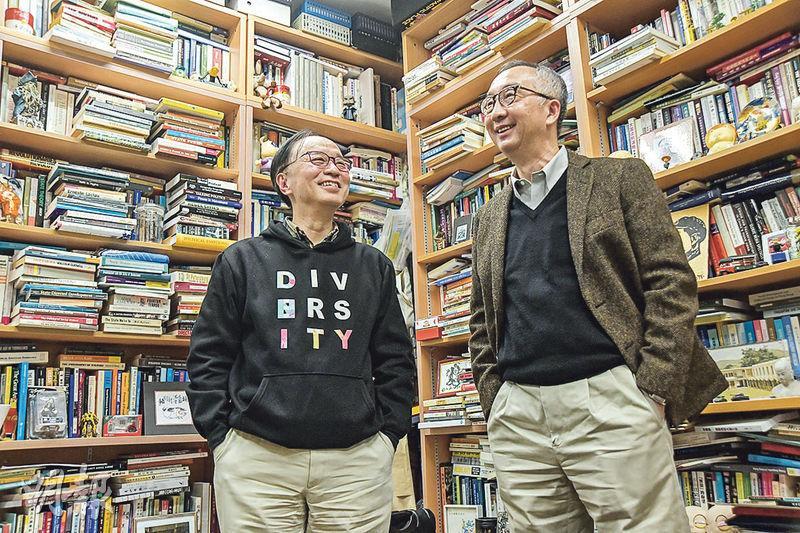
Click here to read more on Prof. Chiu Wing-kai (Left) and Prof. Lui Tai-lok (Right)'s view about the community.

PROGRAMME AIMS

The objectives of the Bachelor of Social Sciences (Honours) in Sociology and Community Studies programme are:

  • To equip students with sociological perspectives to understand the transformations and developments of Hong Kong, China and the world;
  • To enhance students’ conceptual and problem-solving skills with a view to promoting personal growth and community sustainability;
  • To develop students’ competency in using appropriate research methodologies in social inquiries


PROGRAMME FEATURES

Sociology-based
Analyses the development of Hong Kong and the regional community with the use of appropriate sociological concepts and theories.

Community-driven
Develops practical and sustainable plans for promoting the betterment of communities at local and regional levels.

Experiential Learning
Enables students to apply their knowledge and skills through participating in internship and community projects.


Every effort has been made to ensure that information contained in this website is correct. Changes to any aspects of the programmes may be made from time to time due to unforeseeable circumstances beyond our control and the University reserves the right to make amendments to any information contained in this website without prior notice. The University accepts no liability for any loss or damage arising from any use or misuse of or reliance on any information contained in this website.
Any aspect of the course and course offerings (including, without limitation, the content of the course and the manner in which the course is taught) may be subject to change at any time at the sole discretion of the University. Without limiting the right of the University to amend the course and its course offerings, it is envisaged that changes may be required due to factors such as staffing, enrolment levels, logistical arrangements, curriculum changes, and other factors caused by unforeseeable circumstances. Tuition fees, once paid, are non-refundable.

PROGRAMME INTENDED LEARNING OUTCOMES (PILOS)

To align with the University’s commitment to whole person development and the framework of “PEER & I”, the programme aims to prepare graduates to:

  1. Analyse social issues and problems facing communities at different levels with the use of appropriate qualitative and quantitative research methods (PILO1);
  2. Employ major sociological concepts and theories in accounting for contemporary social, cultural, political and economic changes (PILO2);
  3. Develop evidence-based strategies to enhance quality of life and social well-being in the community (PILO3);
  4. Demonstrate ethical awareness and positive orientations towards personal growth and community development (PILO4)


PROGRAMME STRUCTURE

Domain Components Credit Points (cps)
Major

Major Core

18

Internship

3

Major Electives

6

Cross-Faculty Core Course

3

Major Interdisciplinary Course

3
Final Year Project

Honours Project I: Research Methods and Proposal /
Capstone Project I: Research Methods and Proposal

3

Honours Project II: Research Report / Capstone Project II: Project Output

3
Electives / Minor

Electives / Minor

15

General Education

6

Total:

  60

Information Technology Competence Requirement

Note: Classes will be held in Tai Po Campus and Tseung Kwan O Study Centre / North Point Study Centre / Sports Centre as decided by the University.


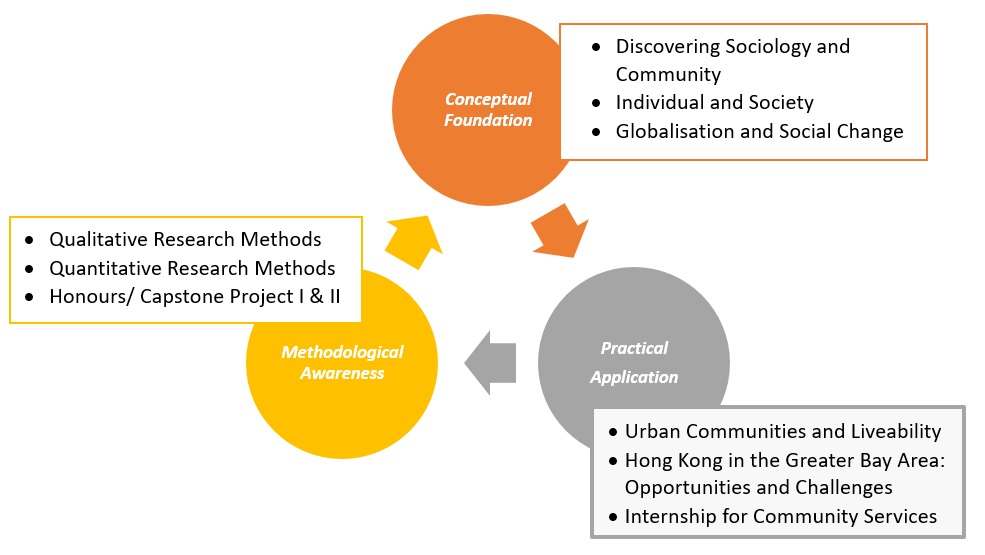
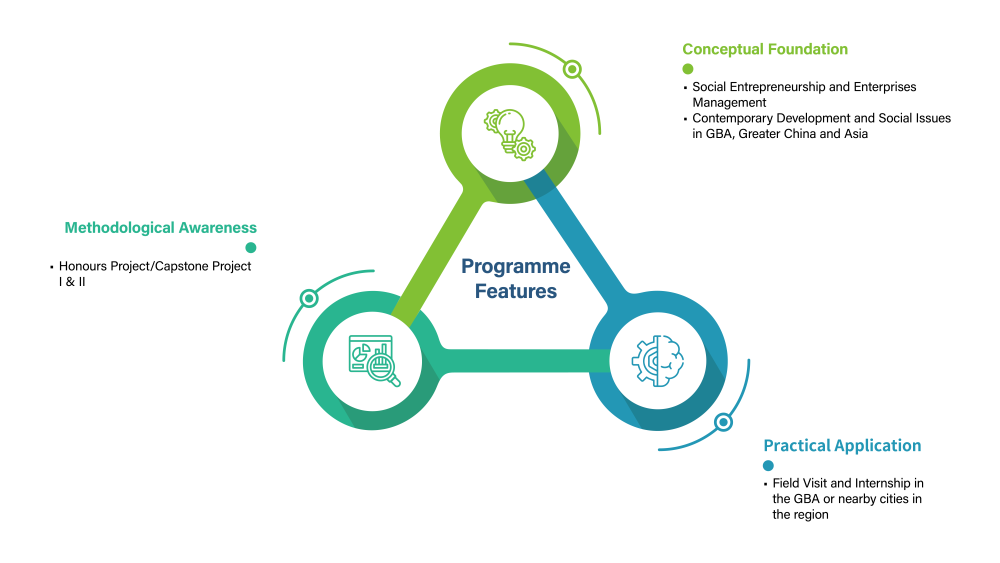
The Programme emphasises the following three areas: (a) conceptual foundation; (b) methodological awareness; and (c) practical value. At the conceptual level, the programme aims to familiarise students with key concepts considered as the building blocks of sociological analyses, including: (1) power, (2) class and inequality, (3) institutions, (4) social structure, (5) culture, (6) gender, (7) identity, (8) intersectionality, (9) globalisation, and (10) risk. At the methodological level, the programme aims to develop students’ competency in the following two areas: (1) designing and conducting social survey; and (2) designing and conducting fieldwork. Students are expected to be able to develop plans for administering a research, identify the strengths and weaknesses of research methods through literature review, and interpreting results. At the practical level, the programme aims to provide ample opportunities for students to link their sociological knowledge with different community concerns and opportunities.

Every effort has been made to ensure that information contained in this website is correct. Changes to any aspects of the programmes may be made from time to time due to unforeseeable circumstances beyond our control and the University reserves the right to make amendments to any information contained in this website without prior notice. The University accepts no liability for any loss or damage arising from any use or misuse of or reliance on any information contained in this website.

Any aspect of the course and course offerings (including, without limitation, the content of the course and the manner in which the course is taught) may be subject to change at any time at the sole discretion of the University. Without limiting the right of the University to amend the course and its course offerings, it is envisaged that changes may be required due to factors such as staffing, enrolment levels, logistical arrangements, curriculum changes, and other factors caused by unforeseeable circumstances. Tuition fees, once paid, are non-refundable.

Course Title Course Code & Outline
Major Core Courses*# (18 cps)
Discovering Sociology and Community  SSC3306
Introduction to Social Design: Theory and Praxis  SSC3355
Urban Communities and Liveability  SSC3309
Qualitative Research Methods  SSC3310
Hong Kong, China in the Greater Bay Area: Opportunities and Challenges  SSC4305
Quantitative Research Methods  SSC4311
Internship (3cps)
Internship for Community Services  SSC4312
Major Elective Course (6 cps) (Choose 2 out of 10 electives)
Comparative Social Policy  GCS4029
Social Theory for Critical Thinking  SSC2253
Schools and Society: Sociological Perspectives and Reflections  SSC2319
Values Pluralism and Cultural Diversity in Hong Kong, China  SSC3234
NGOs and Social Innovation  SSC3264
Individual and Society  SSC3307
Globalisation and Social Changes  SSC3308
Community Event Planning and Operation  SSC3357
Sports and Community Development  SSC4313
Digital Communities in the Information Age  SSC4314
Major Interdisciplinary Course (3 cps)
The Sustainable Development Goals and Education  INS4065
Final Year Project (6 cps)
Honours / Capstone Project I: Research Methods and Proposal   SSC4298 / SSC4297
Honours Project II: Research Report / Capstone Project II: Project Output   SSC4302 / SSC4301
Cross-Faculty Core Course (1 cp)
Cross-Faculty Core Course  CFB3007

*Subject to change and/or approval
#Students admitted into this programme starting from the 2023/24 cohort are required to visit the Greater Bay Area (GBA) for a short trip (e.g. 1-day or 2-day 1-night trip) in order to complete the Cross-Faculty Core Course. While the GBA trip is heavily subsidised, students are still required to contribute part of the estimated cost of the trip ("student contribution"), whereas personal entertainment, meals expenses, travel document fee and personal insurance costs will not be supported. The estimated cost of the GBA trip for students admitted to the 2023/24 cohort is not available yet as it is subject to a variety of factors such as changes to the cost of the GBA trip as a result of inflation, trip duration, traveling expenses, the exchange rate, etc. The exact amount of student contribution is thus not available.

Please more details, please visit https://www.apply.eduhk.hk/ug/programmes/scs


Every effort has been made to ensure that information contained in this website is correct. Changes to any aspects of the programmes may be made from time to time due to unforeseeable circumstances beyond our control and the University reserves the right to make amendments to any information contained in this website without prior notice. The University accepts no liability for any loss or damage arising from any use or misuse of or reliance on any information contained in this website.
Any aspect of the course and course offerings (including, without limitation, the content of the course and the manner in which the course is taught) may be subject to change at any time at the sole discretion of the University. Without limiting the right of the University to amend the course and its course offerings, it is envisaged that changes may be required due to factors such as staffing, enrolment levels, logistical arrangements, curriculum changes, and other factors caused by unforeseeable circumstances. Tuition fees, once paid, are non-refundable.

“Kok Echo Store”: Playthings Connect Tai Kok Tsui Community

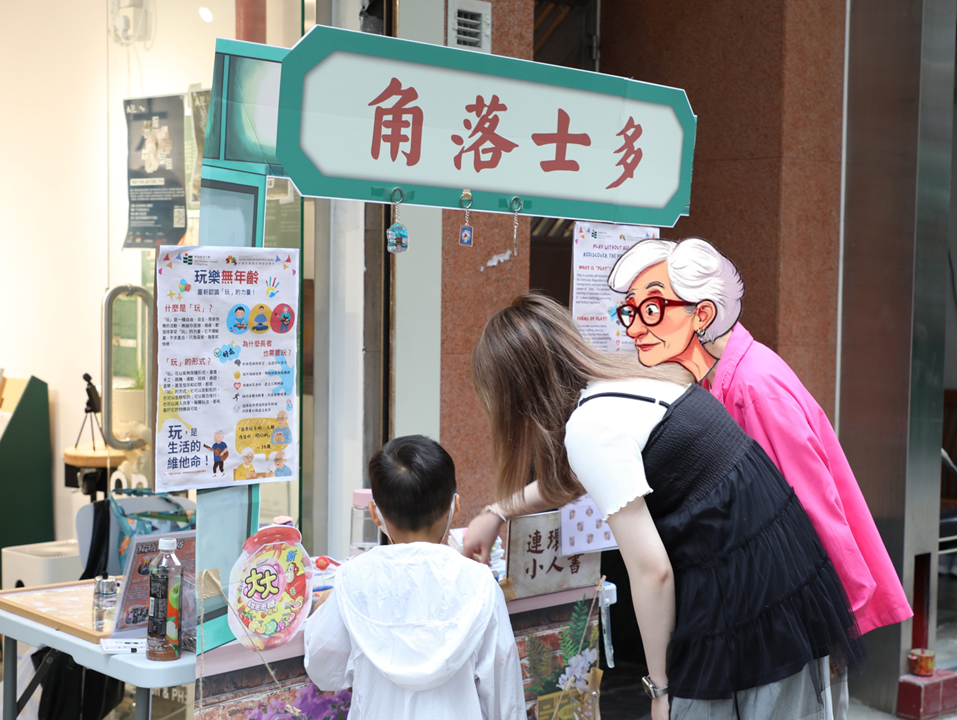
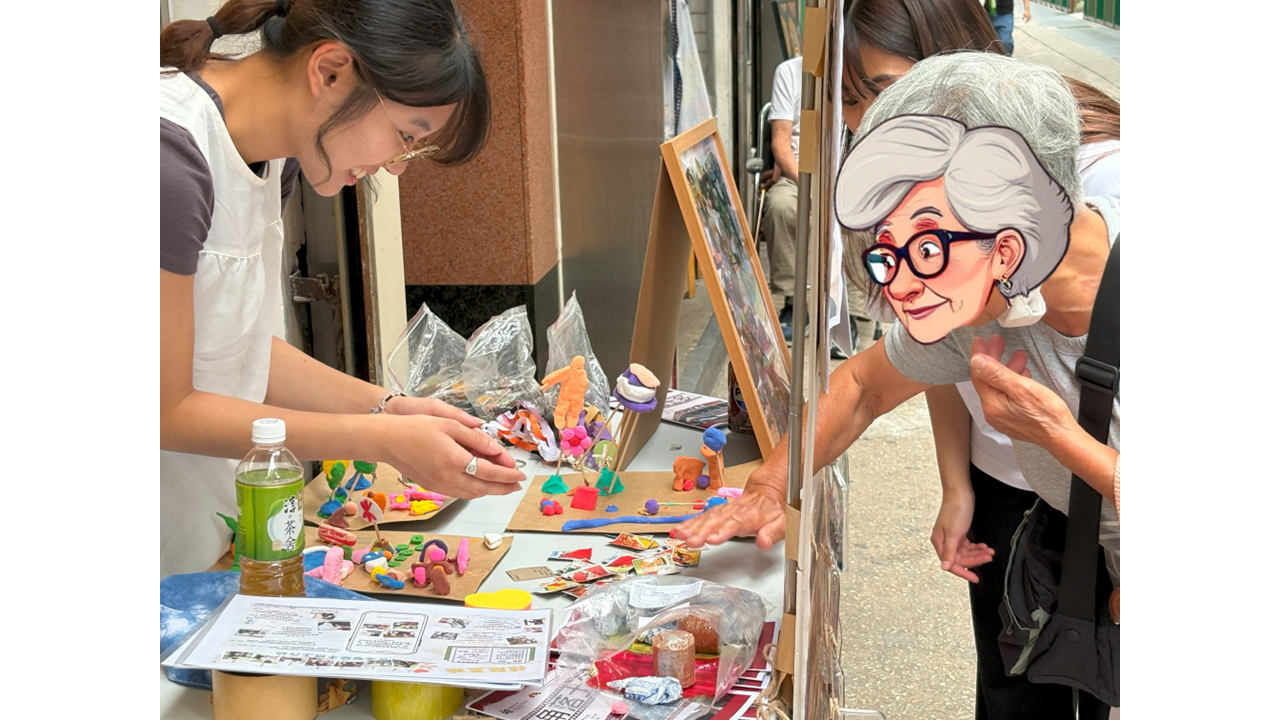
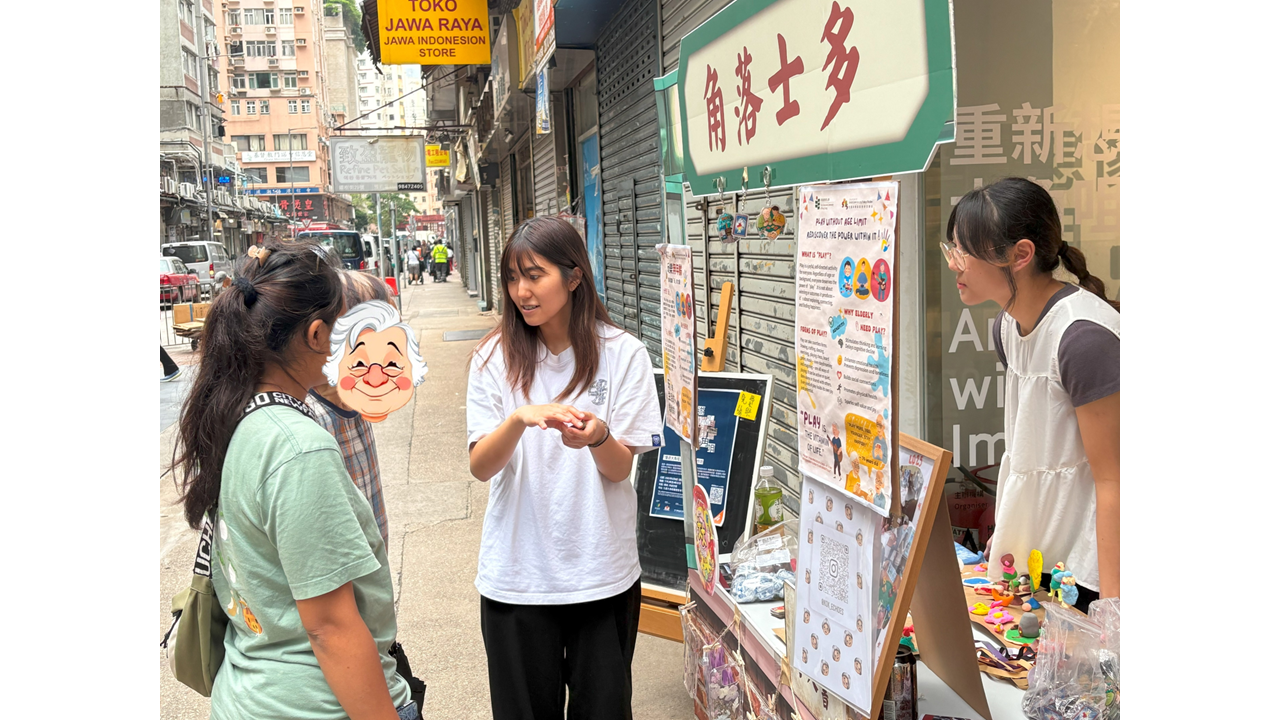
The greatness of playing is not just a leisure and joyful activity. It can be a hidden force that connects different generations in the neighborhood. Six students from the Sociology and Community Studies program used playthings as a medium to gather neighbors during a three-day exhibition in Tai Kok Tsui last month to have warm conversations with each other.

In the last few months, these students organized and invited the elderly from Tai Kok Tsui to join a one-day field trip in Tai Kok Tsui as well as workshops on dyeing, phone-case art making, and weaving. These activities were building connections between the elderly and the younger generation. Now, the students showcased their work through booths and exhibitions in Tai Kok Tsui.

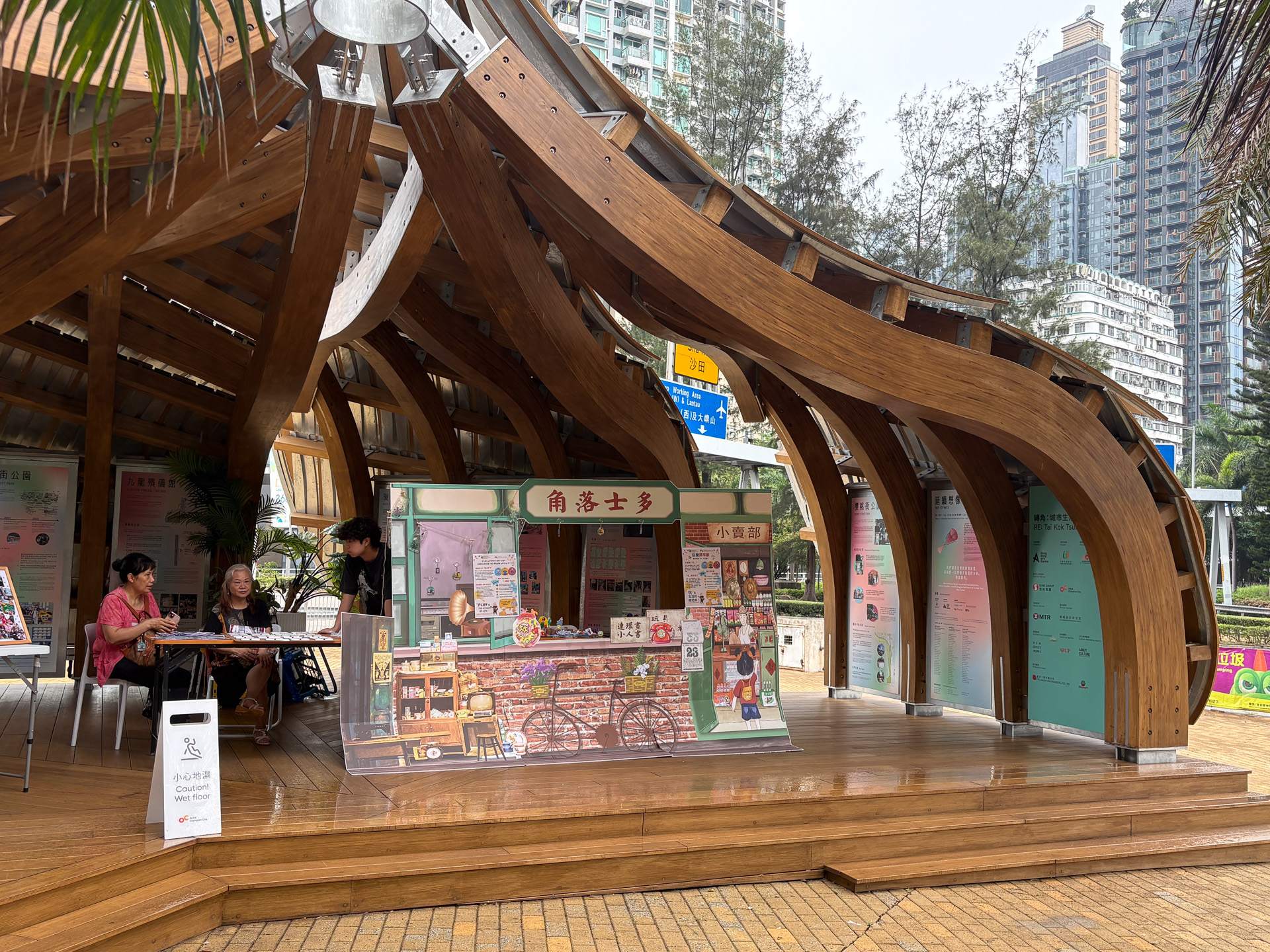
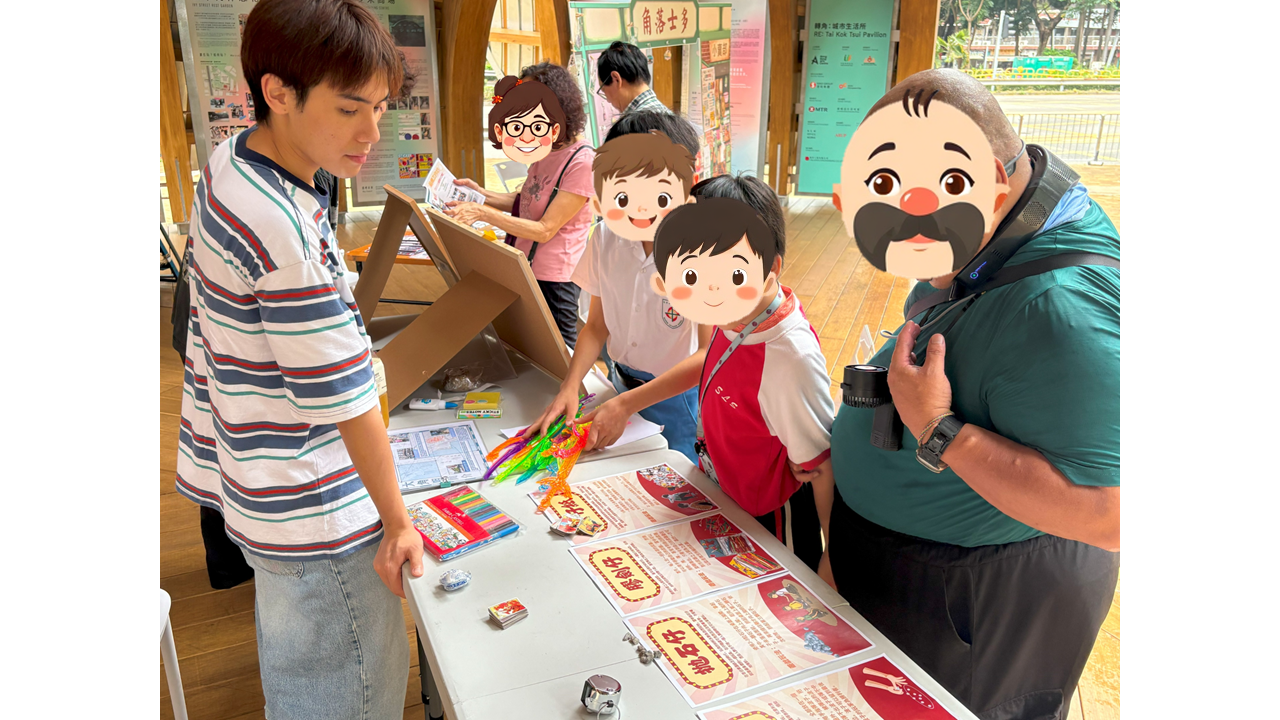
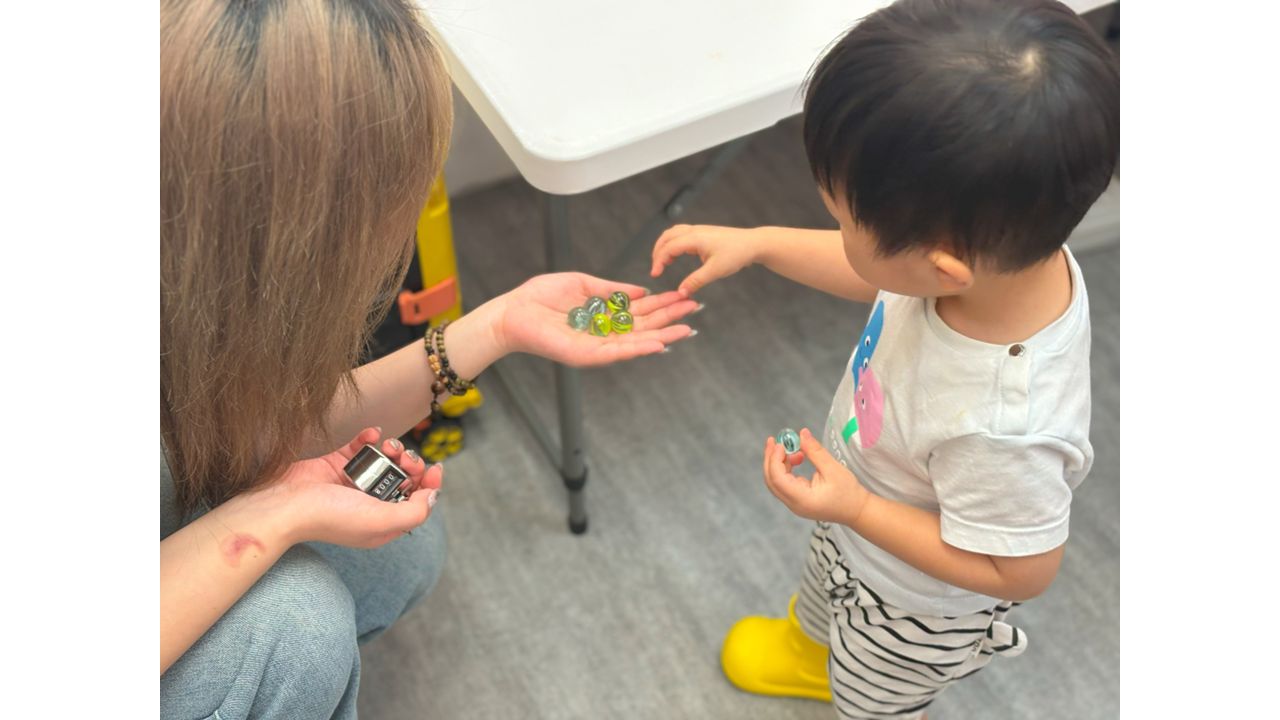
The "Kok Echo Store" exhibition treated Tai Kok Tsui as a connecting echo chamber and decorated the booth as a nostalgic store to bring neighbors back to the past. Playthings that the elderly once played with were placed everywhere. People could pick one plaything, such as pogs and marbles, to immerse themselves in the elderly’s childhood experiences.

On the first day, 29 May, the booth was set up at the public space “RE: Pavilion”. Pedestrians from Tai Kok Tsui walking to the nearby shopping mall could stop by and enjoy playful moments at the students’ booth.

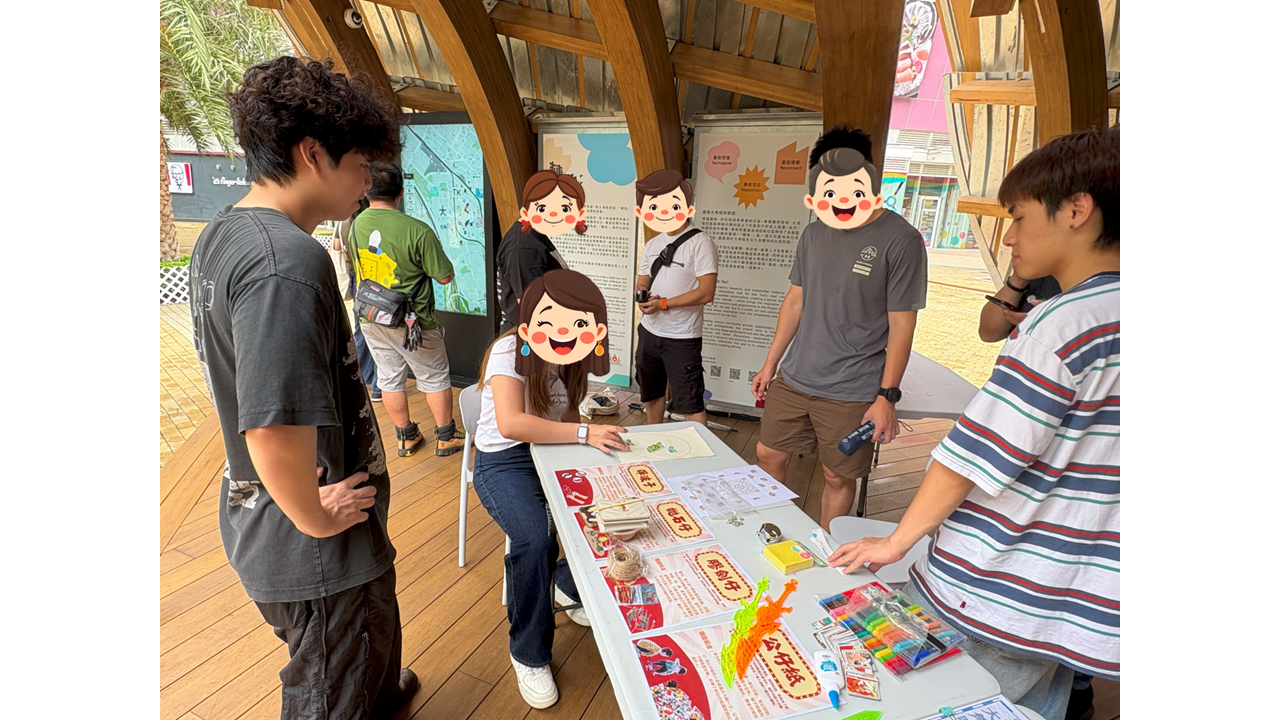
As bad weather was expected, the students moved their booth to the Re: TKT Co-Creation Space on the second and third days (30 May and 31 May). Neighbors could walk indoors to play with the toys.

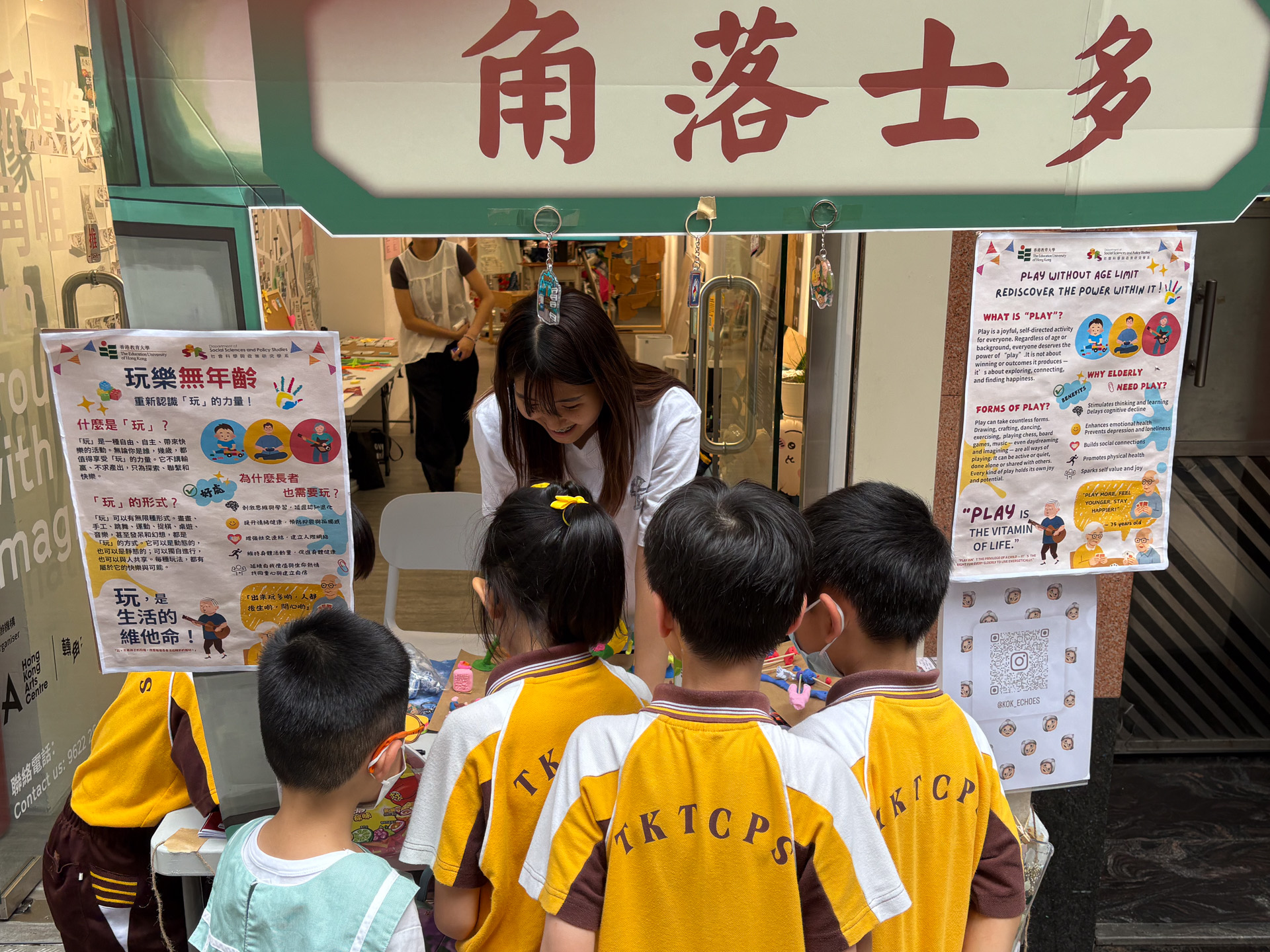
Typically, neighbors would walk by and take a look, and suddenly, people began to gather. The incredible thing was that many parents brought their kids to play with the playthings. A lot of primary school students came in groups after school, creating an exciting vibe.

Through playing together in a moment, different generations learned about each other's playthings and how they played. This was a great opportunity for networking and enhancing social cohesion.


Some elderly participants from the workshops visited the booth in the public space “RE: Pavilion” to chat with the students once they met.


Grandparents stopped by to play with their kids and share what they used to enjoy in the past.


Simple games brought joy, even for a short period after lunch.


After school, primary students rushed into the booth to play games, and the students were busy responding to them.


An elderly showed students how to play with pogs.


A foreign domestic helper told students she also played the “throwing stones” game in her childhood.


Without saying a word, a small child played marbles happily with a student, a total stranger.


Participants’ stories were recorded, collected, and shared to foster connections among the community.


Playing not only enhances interaction between each other. It’s a great way to engage the elderly with the community.


Exhibition of Encounters with Elderly in Tai Kok Tsui

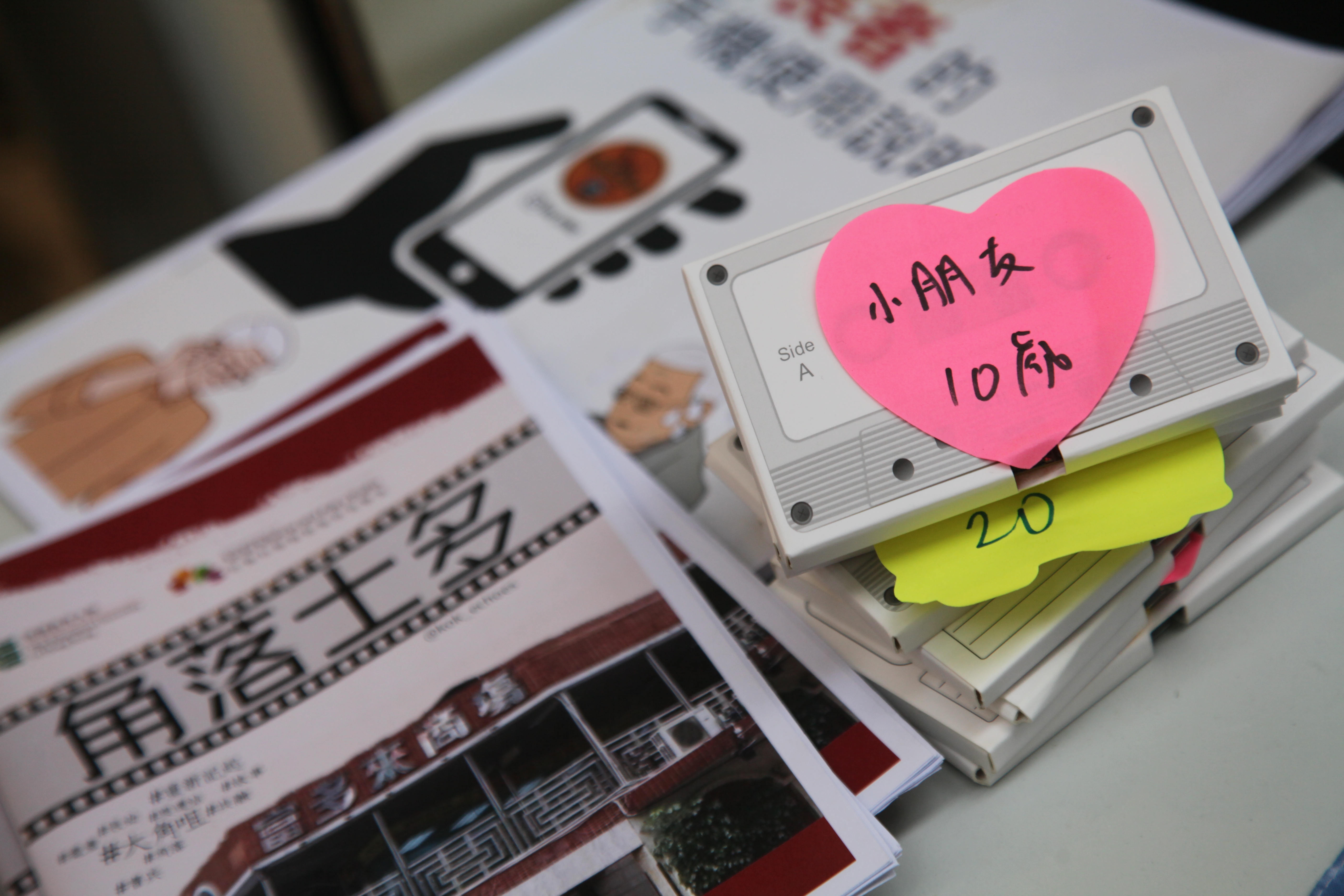
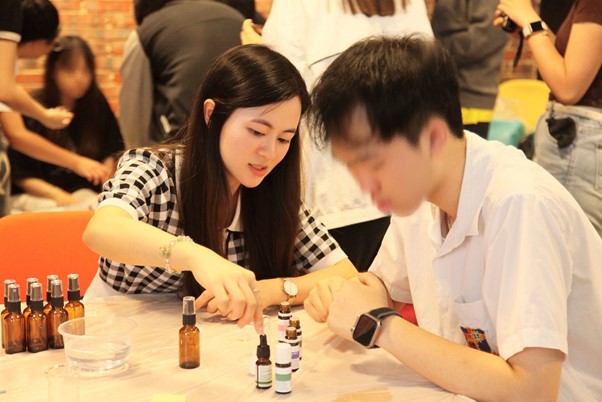
Over the past two months, six students from the Bachelor of Social Sciences (Honours) in Sociology and Community Studies programme became connected to a group of senior residents from the Tai Kok Tsui area. A host of activities like tea gathering, dyeing art creations, board games, and mobile phone and weaving workshops were organized for the residents to bring them closer to young people and to foster cross-generational understanding. The students documented their encounters with the senior residents with an exhibition at the EdUHK campus from 9 to 11 April, allowing their fellow students and members of the EdUHK community to appreciate their impact on community inclusion. (The exhibition will also be displayed in Tai Kok Tsui in the future, so keep an eye on the instragram @kok_echoes).

This event is organized as part of a capstone project of the Bachelor of Social Sciences (Hons) in Sociology and Community Studies programme, also supported by Specific Student Empowerment Work Scheme (Specific SEWS) 2024/2025 under the supervision of Dr. Izzy Yi JIAN.


Field trip to Guangzhou: Discovering Community Change and Cultural Landscape

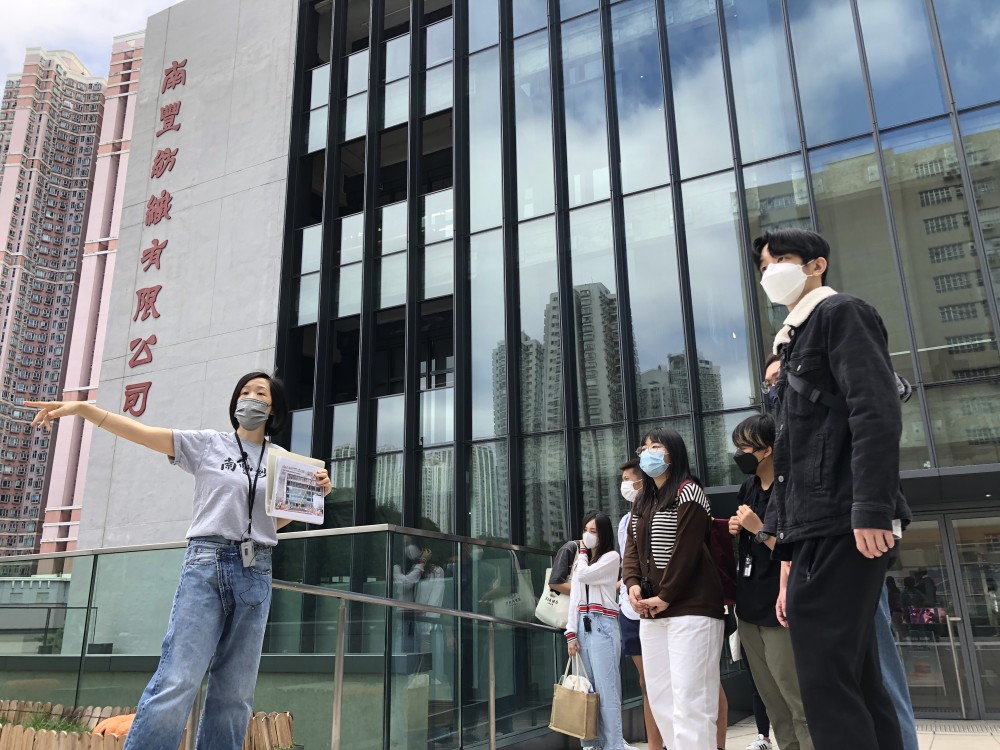
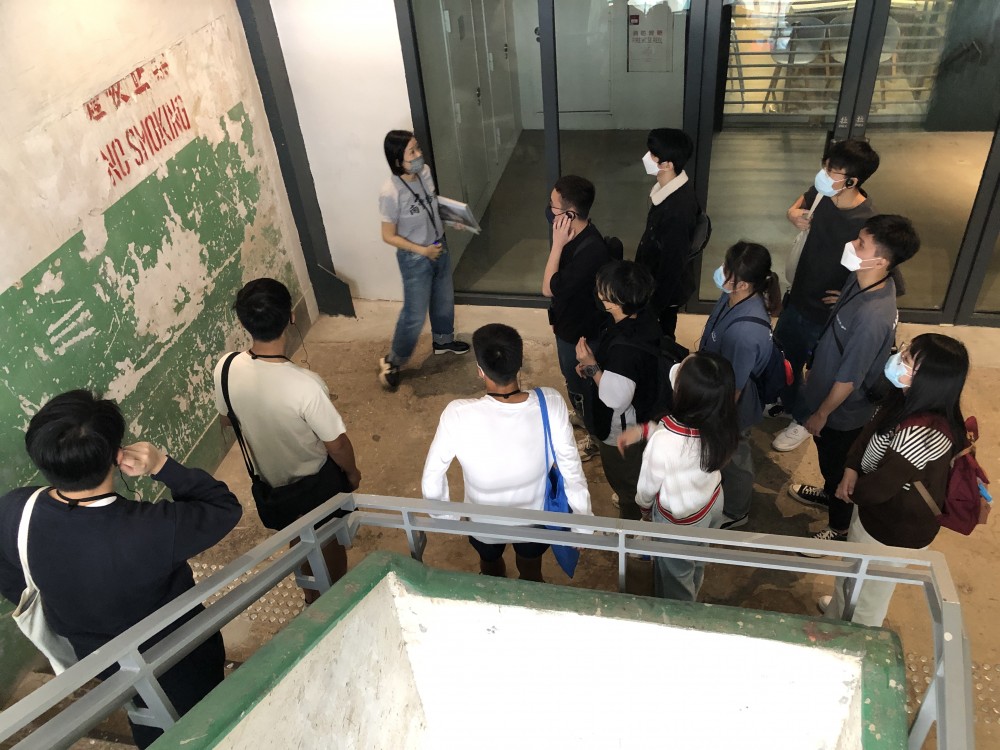
Students and teachers from the Bachelor of Social Sciences (Honours) in Sociology and Community Studies program went on a field trip to Guangzhou from 15 to 16 April. They visited the major attractions in the area, such as Xiguan Dawu Culture Life Hall, Liwan Museum, Yong Qing Fang, Dafo Temple and Shamian Island, and learned about the changes in the Guangzhou community. Another highlight of the trip is to visit the newly opened Baietan GBA Art Center that combines three museums into one: Guangdong Intangible Cultural Heritage Museum, Guangdong Literature Museum and the Guangdong Museum of Art, and acquire a deeper understanding about the culture of the Greater Bay Area.

Visited The Mills to know the local textile factory stories

20/10/2022

SCS Study Experience Sharing

Studying in the SCS program was not a random choice for me—it came from a place of curiosity and uncertainty. I still remember my professor once saying, “As you are unsure of what you want to do with your life, you study sociology.” That sentence deeply resonated with me. Before entering university, I often questioned the real purpose of higher education. Is it solely for improving my career prospects, as many people around me say, or is it about self-exploration? To me, the two are intertwined, but self-exploration matters more, as true fulfillment is what I ultimately strive for.

Looking back, my years in SCS have been a continuous journey of discovering who I am. With the guidance of inspiring professors and the strong academic support provided, I gradually found my own answers. SCS taught me how to think, not what to think. This process trained me to approach things with curiosity and skepticism rather than relying solely on external answers, and to form my own conclusions with confidence. Through this experience, I developed an independent way of thinking and built a habit of reflection that brought me closer to understanding myself.

Throughout this exploration, the Capstone Project and internship opportunities empowered me to take on challenges and taught me how to learn from mistakes—something I now believe is far more valuable than simply earning a degree. If university were merely about securing a job, then a degree would just be an entry ticket, whereas experiential learning is what truly matters. Through these experiences, I gained valuable hands-on knowledge, discovered my strengths, and explored suitable career paths. They also helped me develop essential workplace skills—event planning, administrative management, communication, and interpersonal relations—which now enable me to perform confidently in my current role at an NGO.


Angela working in her Capstone Project with a secondary student

Beyond academics, SCS allowed me to connect more deeply with my community and engage with a range of social issues. The university’s abundant resources and exchange programs also opened new doors for me. I had the amazing opportunity to take part in service tours to Taiwan, China and New Zealand, where I experienced local cultures and community dynamics firsthand. What I appreciated most was my professors’ ongoing support for my personal and professional growth. For instance, they encouraged me to join the six-month Pursuit of X program, which gave me valuable work experience in my field of interest and helped me build a strong professional network. That experience allowed me to recognize my strengths and weaknesses and define the kind of career that truly fits me, paving the way toward finding my ideal job after graduation.

To sum up, my university experience in SCS has been more than an accumulation of knowledge — it has been a journey of self-discovery. I am deeply grateful to all my professors and classmates who accompanied me along this path, making the journey of exploration a little less lonely. 

Angela Kwong
Class of 2025

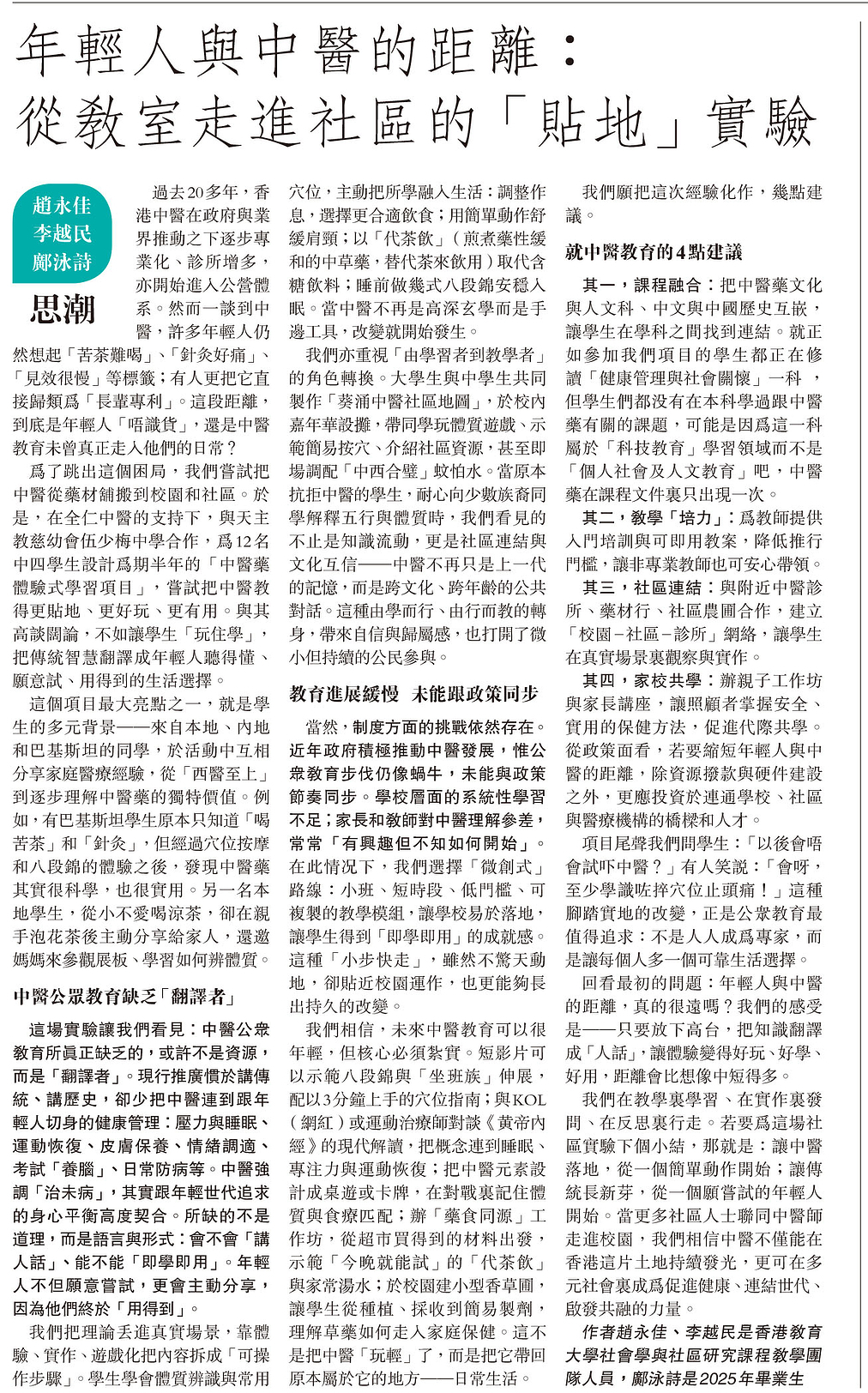
趙永佳教授、李越民博士、鄺泳詩小姐:年輕人與中醫的距離:從教室走進社區的「貼地」實驗

Ming Pao, 3/11/2025

Click here to read more


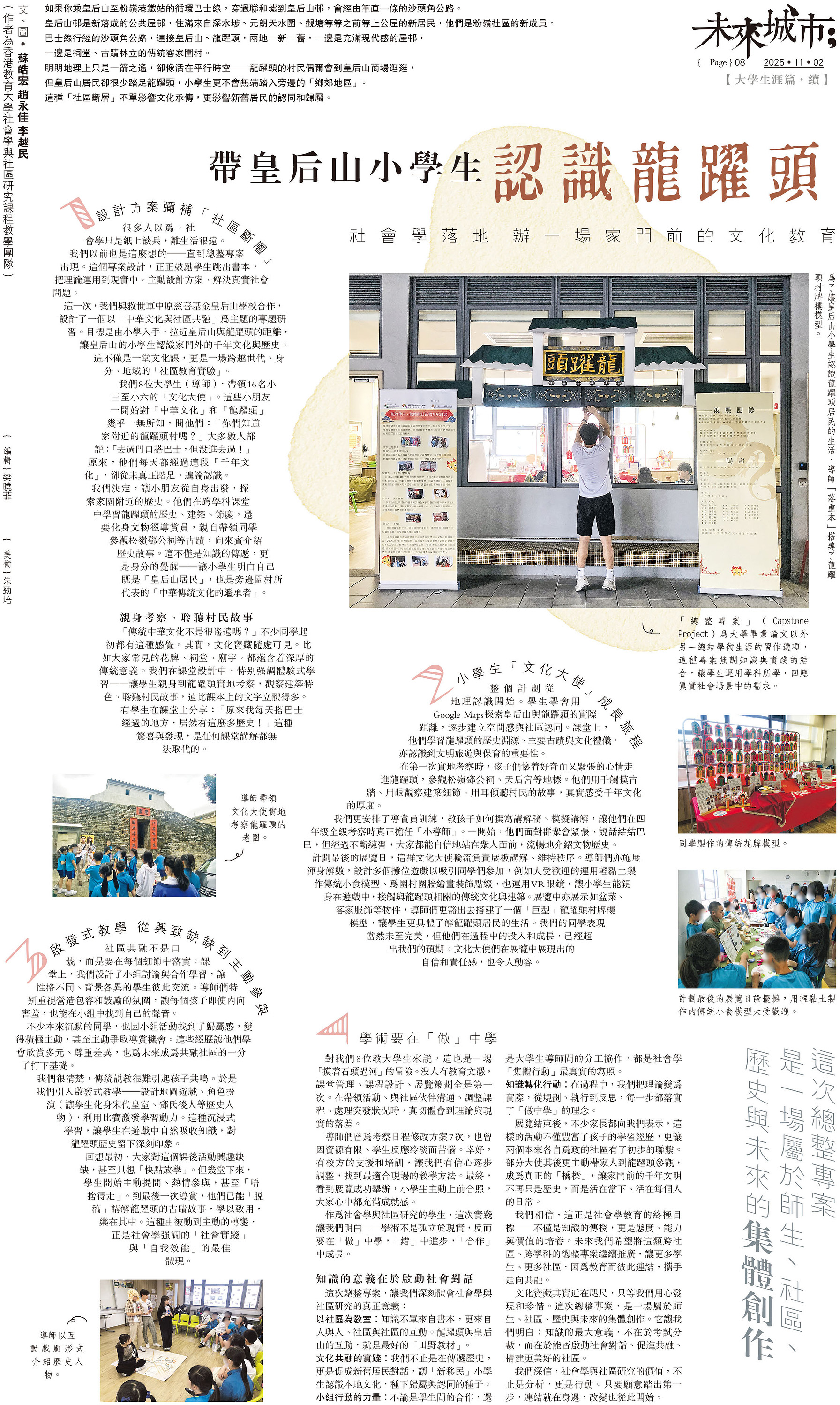
趙永佳教授、李越民博士、蘇皓宏先生:未來城市:帶皇后山小學生認識龍躍頭 社會學落地 辦一場家門前的文化教育

Ming Pao, 2/11/2025

Click here to read more


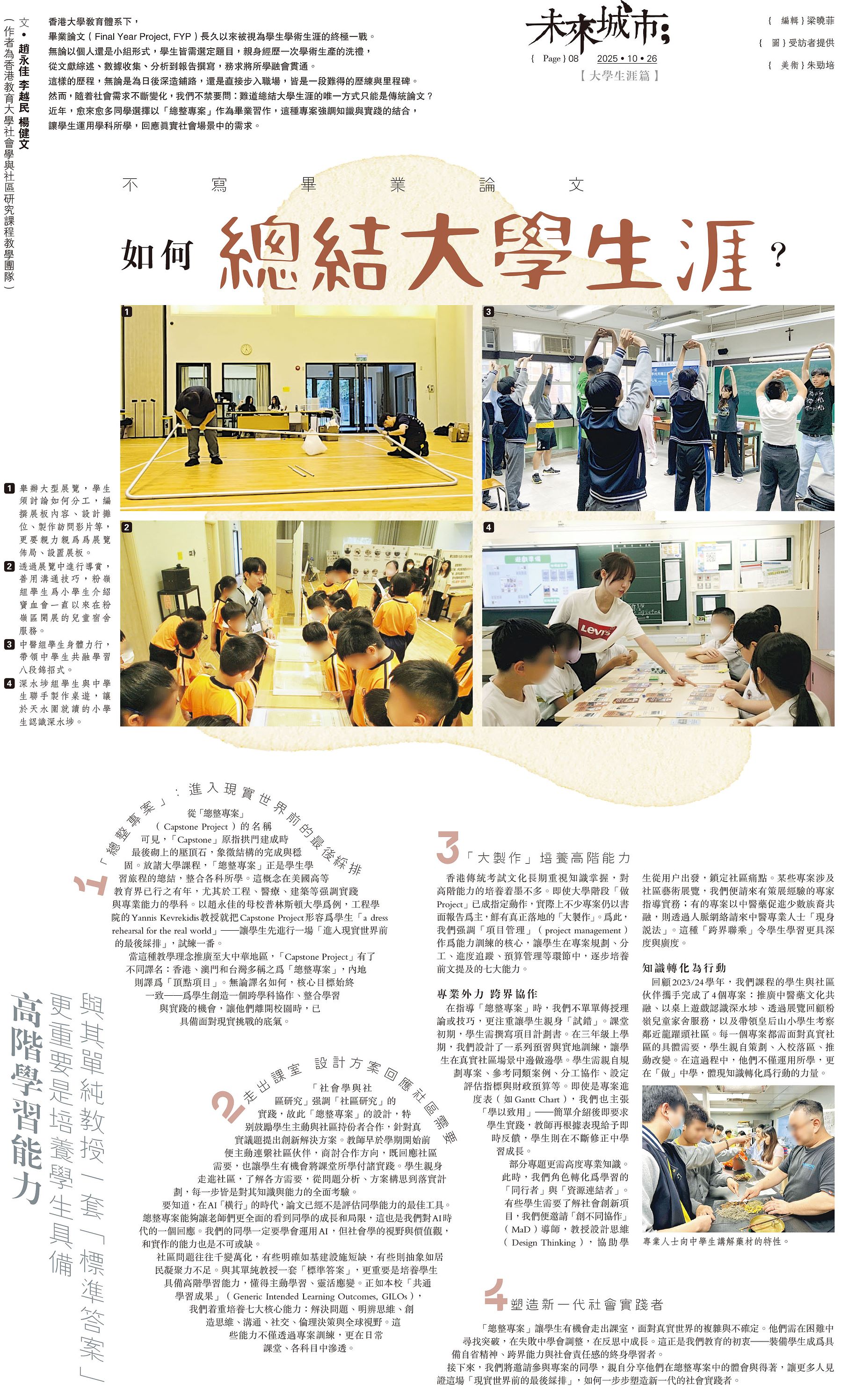
趙永佳教授、李越民博士、楊健文先生:未來城市:不寫畢業論文 如何總結大學生涯?

Ming Pao, 26/10/2025

Click here to read more


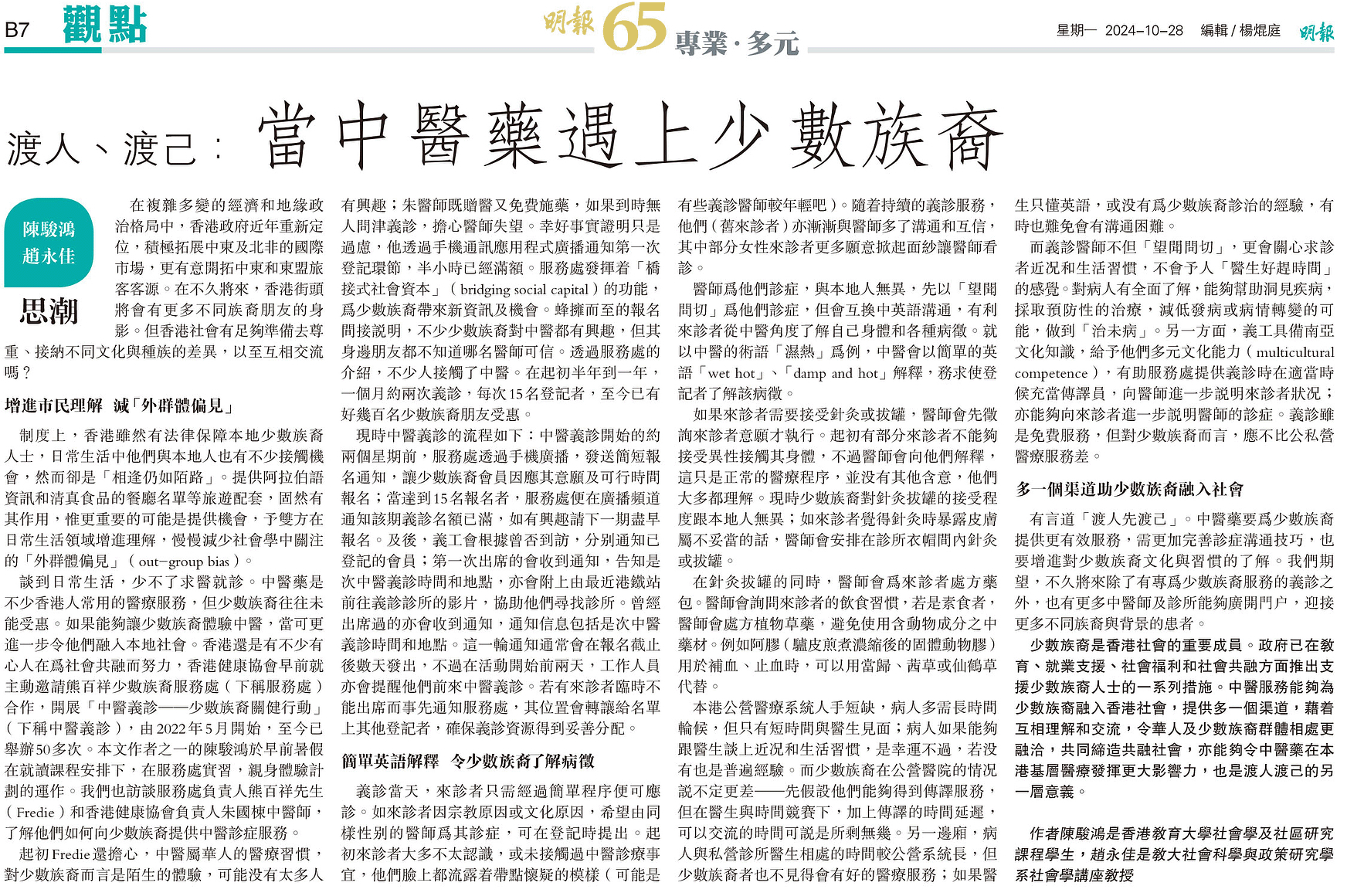
陳駿鴻、趙永佳:渡人、渡己:當中醫藥遇上少數族裔

Ming Pao, 28/10/2024

Click here to read more


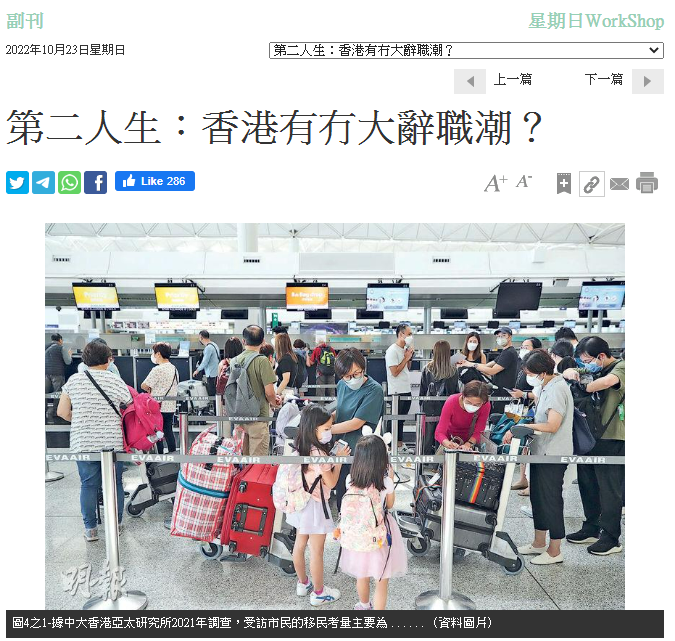
趙永佳︰第二人生︰香港有冇大辭職潮?

Ming Pao, 23/10/2022

Click here to read more


趙永佳、李越民:做好社區工作 打通城市治理的最後一公里

Ming Pao, 22/11/2021

Click here to read more


趙永佳×呂大樂︰貼地社會學聚焦社區 鏡粉、「觀塘老母」有得研究

Ming Pao, 9/1/2022

Click here to read more

This programme will play special attention to the fostering of portable skills and generic competencies that could be applied in a wide range of professional settings. The programme's emphasis on equipping students with a full range of research tools, both qualitative and quantitative, will benefit students' career development significantly. Its focus on a sociological perspective in community contexts will also ensure that much of what students learn here would have practical applications.

Graduates can find employment across a wide range of fields, including: community development workers, non-governmental organisation officers, community liaison officers in government departments and public organizations, international aid/development workers, public relations officers, social and marketing researchers, research assistants in academic institutions, and youth workers. 

JUPAS Code
N/A
Programme Code
A2B101
Abbreviated Programme Title
BSocSc (SCS)
Medium of Instruction
Most of the Major courses will be taught in English. For some non-Major courses, Putonghua or Cantonese will be adopted as the medium of instruction when the language is considered to be the most effective for teaching.
Ssps Image
BSocSc(SCS)_2025-26_1200x900.jpg
Position
Programme Leader
Name
Dr LO Sin Chi Gigi
Email
gigilo@eduhk.hk
Telephone
2948 7399
Position
Programme Enquiries
Name
Ms Jane LEE
Email
jclee@eduhk.hk
Telephone
2948 7707
Download Leaflet
Study Mode
Study Period

Bachelor of Social Sciences (Honours) in Global and Environmental Studies (With the final intake in 2021/22)

*This programme has ceased new intake from 2022 and will be phased out after 2024/25.

INTRODUCTION

This is an interdisciplinary, cross-cultural programme designed to provide students with an in-depth understanding of the increasing interactions amongst globalisation, environmental change, and economic, political, and social developments, as well as strong critical-thinking, problem-solving, and communication skills. The unique features of the programme include the following.

  1. In-depth, integrated understanding
  2. Interdisciplinary approach
  3. Global phenomena, local action
  4. Experiential learning
  5. Integrated work
  6. Diversified graduation pathways

Every effort has been made to ensure that information contained in this website is correct. Changes to any aspects of the programmes may be made from time to time due to unforeseeable circumstances beyond our control and the University reserves the right to make amendments to any information contained in this website without prior notice. The University accepts no liability for any loss or damage arising from any use or misuse of or reliance on any information contained in this website.

Programme Code Programme Course Offered Course
A4B069 Bachelor of Social Sciences (Honours) in Global and Environmental Studies (Four-year Full-time) Introduction to Political Science SSC1147
Introduction to Sociology and Social Research SSC1148
Introduction to Economics SSC1189
Overseas Field-based Learning # SSC2295
Climate Change and Global Warming GGP3008
Internship (for 2017-2021 cohort & 2018-2022 cohort) INS3008
Global Environmental Governance SSC3104
Protected Areas Planning and Mangement GGP3017
Transnational Migration and Development in Global Cities SSC3143
Climate Change and Society # (from 2019-2023 cohort and onwards) SSC3186
Global Political Economy SSC3212
Urban Growth, Governance and Smart City Development SSC3243
NGOs and Social Innovation # SSC3264
Global Politics SSC3274
Global Citizenship: Theories and Debates SSC3275
Development: Concepts and Debate # (from 2019-2023 cohort and onwards) SSC3279
Exploring Theories and Perspectives on Tourism SSC3300
Urbanization and Transportation: Theory and Policy GGP4011
Tourism and Sustainability GGP4012
Natural Hazards # (from 2019-2023 cohort and onwards) GGP4025
Global Development and Sustainability: Case Studies and Review # INS4052
Internship # INS4053
Capstone Project II: Project Output # INS4063
Honours Project II: Research Report # INS4064
Sustainable Development and Policy SSC4140
Capstone Project I: Research Methods and Proposal # SSC4297
Honours Project I: Research Methods and Proposal # SSC4298

# The course will only be offered for 2019-2023 cohort and onwards.

Any aspect of the course and course offerings (including, without limitation, the content of the Course and the manner in which the Course is taught) may be subject to change at any time at the sole discretion of the University. Without limiting the right of the University to amend the course and its course offerings, it is envisaged that changes may be required due to factors such as staffing, enrolment levels, logistical arrangements and curriculum changes.

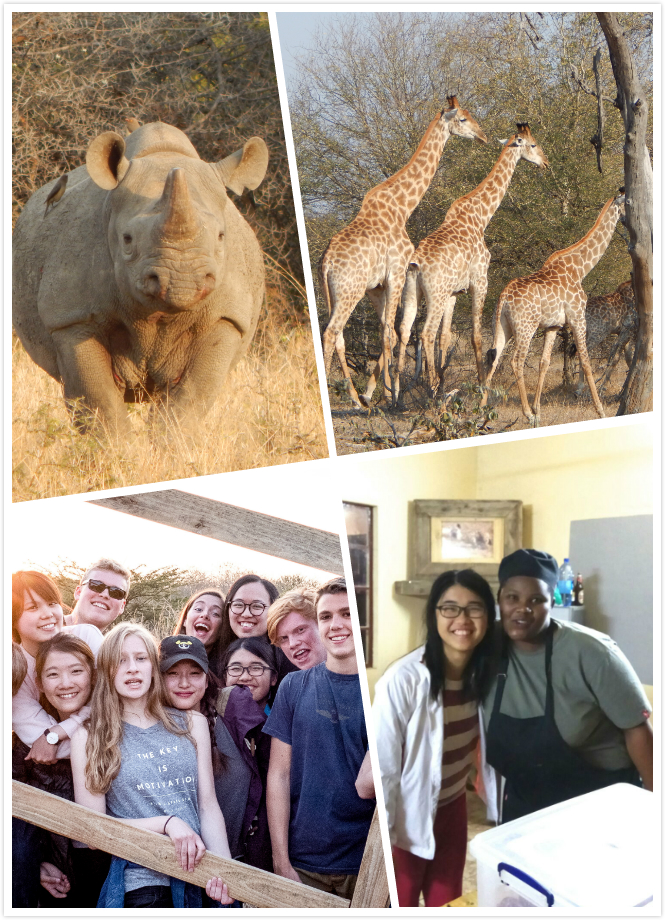
Africa Impact (More info)

Wong Yin Hung Ellen, our graduate, is ready for her new journey....


Regional Summer Insitute (RSI) to South Korea (More info)

29 students participated the Regional Summer Insitute (RSI) to South Korea from 6 June to 13 June 2017.


Discovering Solid Waste Problem in Maldives (More info)

What comes up in your mind when you think of Maldives? Most of the people may think of beaches with crystal clear water and the resorts for vacation. However, many of us may not realize the waste management problem behind the rapid development.

YouTube Video: https://youtu.be/ZStkWZe270M


香港賽馬會特約.小事大意義|綠「識」大灣區.上︰近30名年輕人為了成為生態導賞員 開展大灣區生態環境學習之旅

粵港澳大灣區生態資源豐富,其中與香港緊密相連的廣東省更是中國自然保護地最多的省份。早前香港地方志中心「香港青年大灣區生態環境學習之旅」帶領香港青年前往位處廣東省的深圳、惠州進行一次實地考察,包括 : 深圳市龍華區生態文明展覽館、潛愛珊瑚保育站、惠東港口海龜國家級自然保護區及惠州西湖,認識和瞭解當地的生態環境,以及認識國家在環境保護及生態保育方面的工作。(More info)

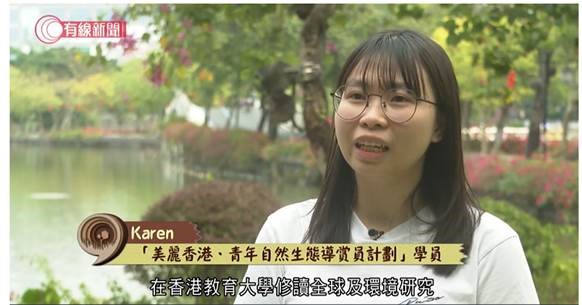
Karen icable
GES Yr 3 student Miss LAM Cheuk Ying (Karen) was interviewed by iCable as the student joined  “Eco Tour Guide” training at Hong Kong Chronicles Institute (香港地方志中心).


Small steps can spur major changes to make HK an environmentally friendly world city (More info)

Wong Yin Hung Ellen, our graduate, is ready for her new journey....


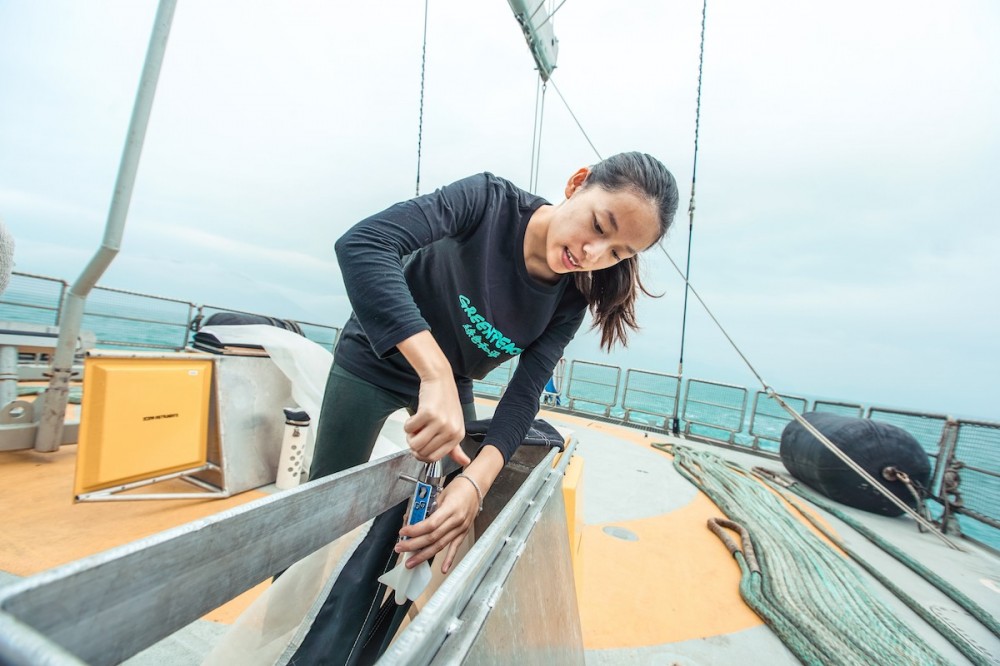
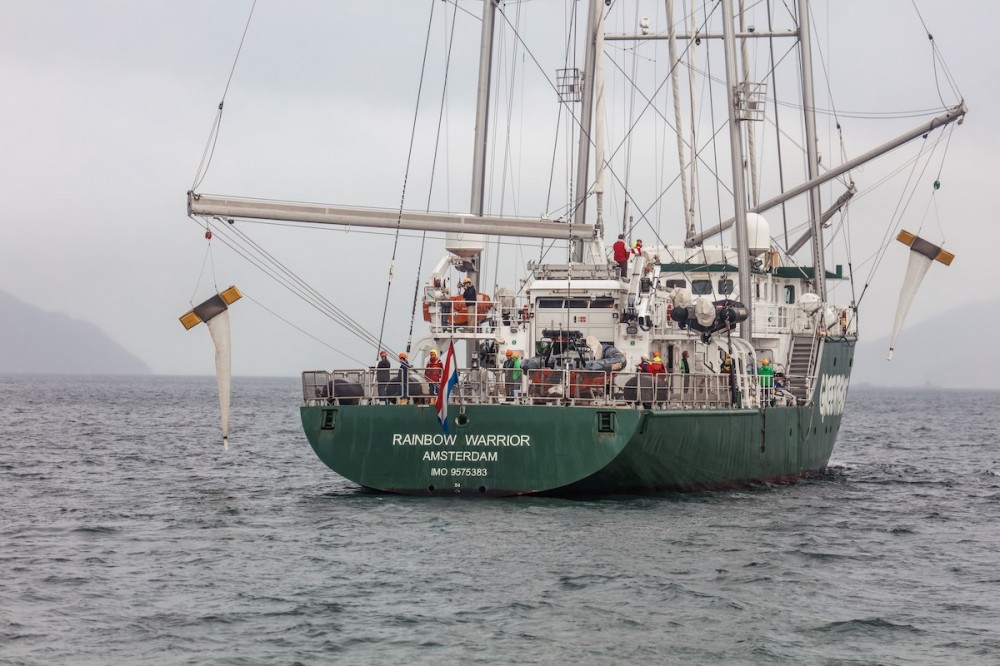
在綠色和平實習 :是我最大轉變的一年 (More info)

「投身海洋保育行業,是我的夢想,未來的旅程可能很漫長,但這段路的起點其實從綠色和平開始。」


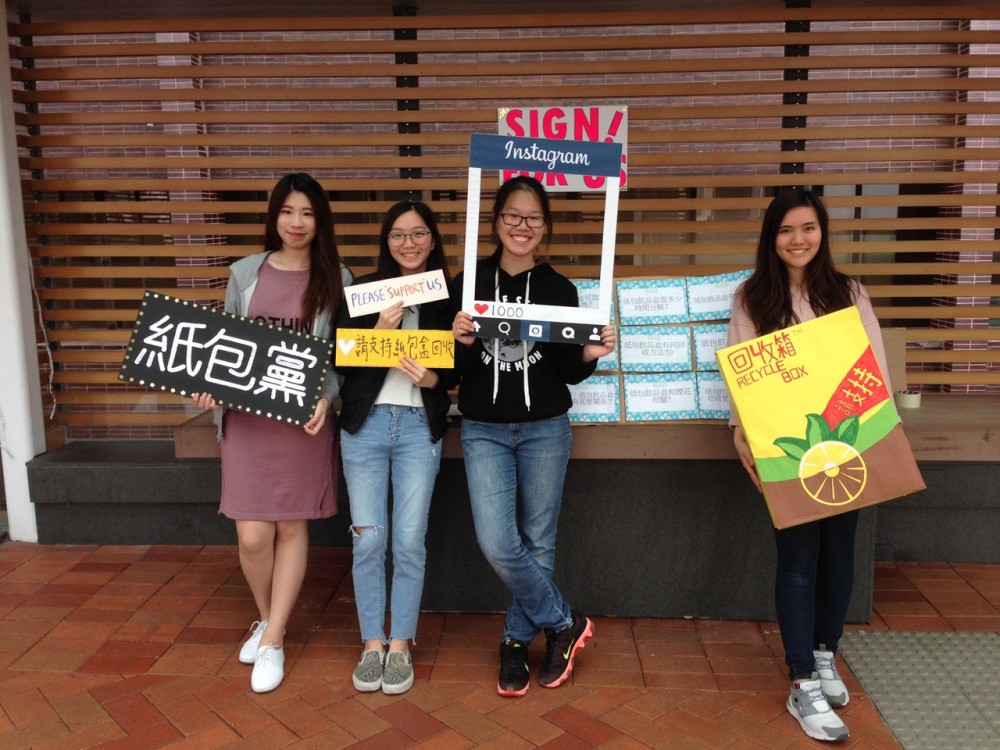
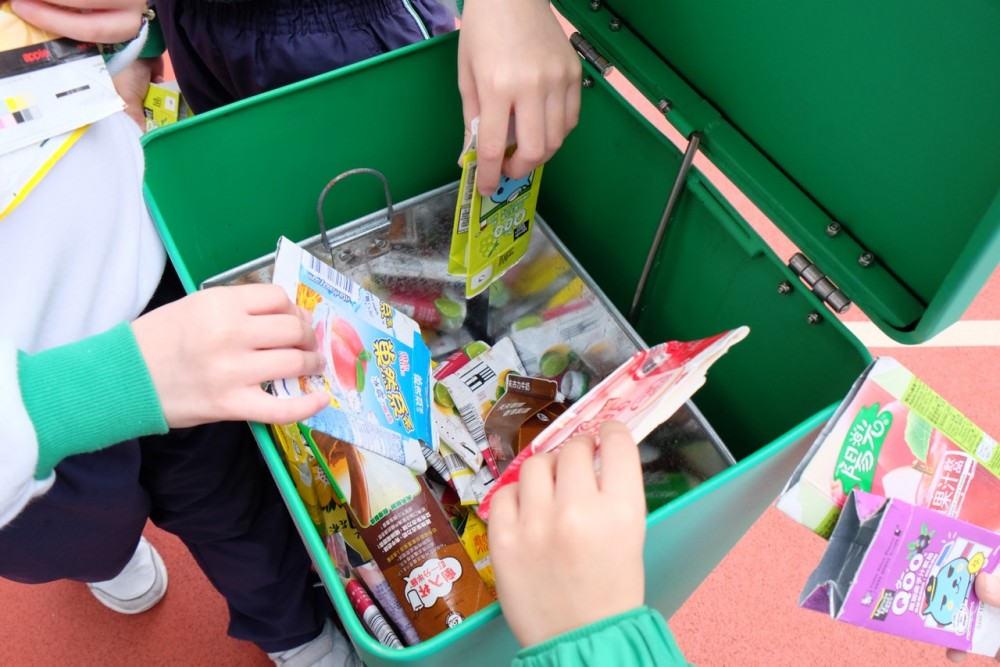
大學生發起聯署 促政府制訂回收政策 (More info)

大學三年級生Sherry和Serena與二年級生Cynthia和Chloe,一同參加了「WWF環境保育領袖培訓計劃」,揀選了紙包飲品盒作為關注的議題。「我曾誤以為這種盒子可放入藍色廢紙回收箱,後來發現錯了,但一直以為不能回收。早前看到綠色力量推動回收飲品盒的計劃,才了解到原來這是可再造的資源。」於教育大學修讀全球及環境研究的Sherry道。

JUPAS Code
N/A
Programme Code
A4B069
Abbreviated Programme Title
BSocSc (GES)
Medium of Instruction
English
Programmes & Courses Tags
Ssps Image
GES.jpg
Position
Programme Leader
Name
Dr HUI Lai Hang Dennis
Email
huilh@eduhk.hk
Telephone
(852) 2948 6365
Position
Admission Enquiries
Email
admission@eduhk.hk
Telephone
(852) 2948 6886
Download Leaflet
Study Mode
Study Period

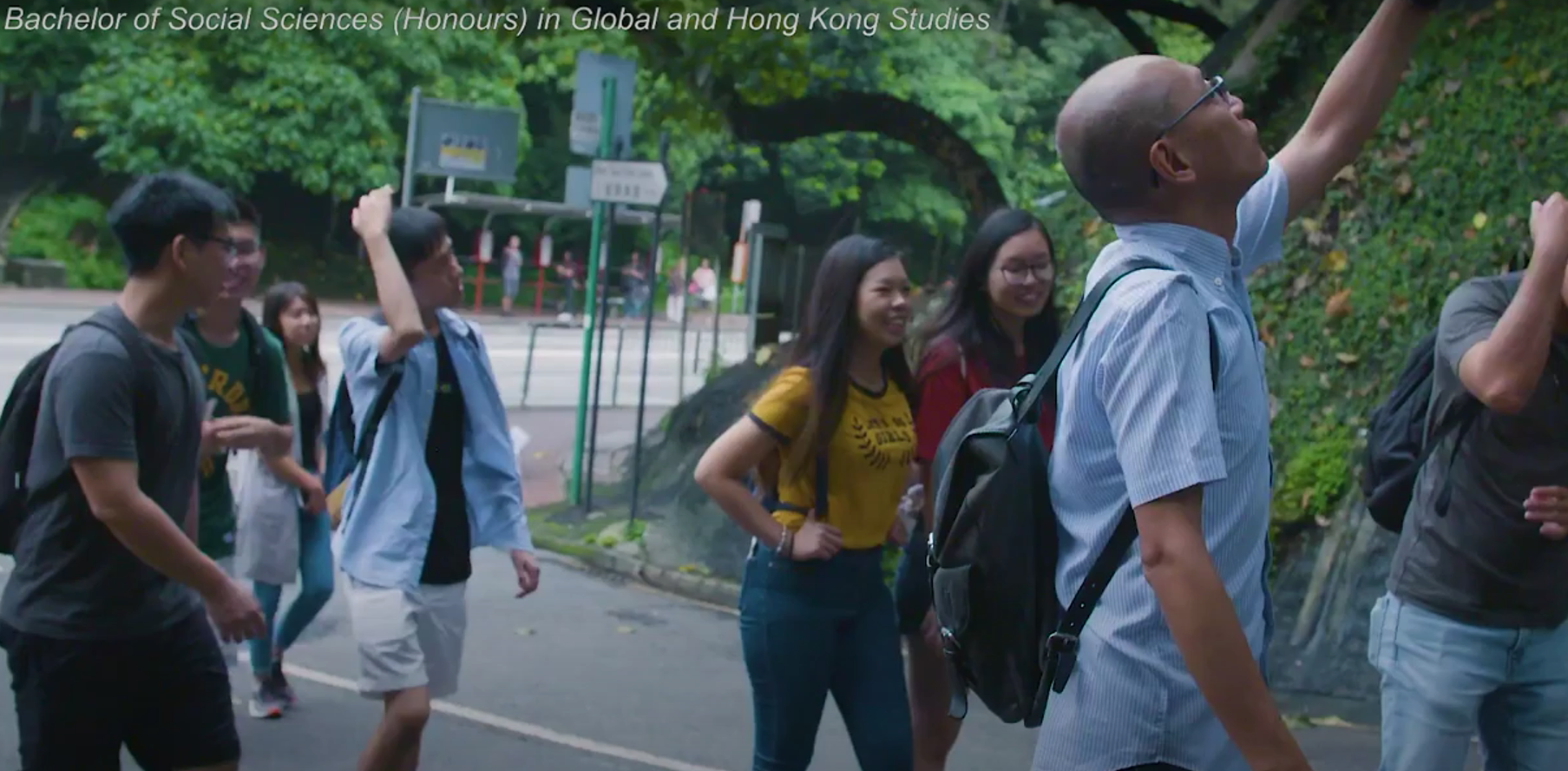
Bachelor of Social Sciences (Honours) in Global and Hong Kong Studies (Senior Year Entry only)

*This programme has been revamped to Bachelor of Social Sciences (Honours) in Sociology and Community Studies in 2022/23.

PROGRAMME AIMS

The objectives of the Bachelor of Social Sciences (Honours) in Global and Hong Kong Studies programme are:

  1. to develop multidisciplinary perspectives for students to comprehend the transformations and development of Hong Kong and the world;
  2. to train students to have a thorough understanding of Global Studies, Hong Kong Studies and the interface between Global and Hong Kong Studies;
  3. to nurture students to become responsible and participatory citizens in multiple communities; and
  4. to achieve complementarity, synergy and cross-fertilization with the education-focused programmes.

PROGRAMME FEATURES

Students enrolled in the programme will be required to take major courses come from the three academic pillars: (1) Global Studies; (2) Hong Kong Studies; (3) the interface between Hong Kong and the World. (See Figure 1). Global Studies emphasize the disciplinary training in political science; Hong Kong Studies cover the courses in cultural studies, political science and sociology; and the Hong Kong/Global interface encourages students to adopt multidisciplinary and interdisciplinary perspectives to understand Hong Kong and its complex interactions with China, the regional and the global spheres.

PILO1: explore knowledge and training in the studies of Hong Kong and the world from multidisciplinary perspectives;

PILO2: develop understanding and critical thinking of the dynamics and transformations of the world and Hong Kong;

PILO3: examine Hong Kong as an interface between the East and West; and

PILO4: appreciate universal values, such as diversity, rationality, rule of law and human rights.

Domain Components Credit Points (cps)
Major Major core 24
Major electives 6
Major Interdisciplinary Course 3
Final Year Project Honours Project I: Research Methods 3
Honours Project II 3
Electives / Minor Electives / Minor 15
Common Core University ePortfolio 3
General Education (GE) Experiential Learning / GE Breadth Course 3
Total:   60
Information Technology Competence Requirement


CURRICULUM CHART OF THE MAJOR


Every effort has been made to ensure that information contained in this website is correct. Changes to any aspects of the programmes may be made from time to time due to unforeseeable circumstances beyond our control and the University reserves the right to make amendments to any information contained in this website without prior notice. The University accepts no liability for any loss or damage arising from any use or misuse of or reliance on any information contained in this website.

List of Major Courses

No. Course Title Course Code & Outline
Hong Kong Studies
1 Foundation of Hong Kong Studies (will NOT be offered from 2020/21)/
Foundations of Hong Kong Studies (will be offered from 2020/21)
SSC1231 / SSC2231
SSC1231 will be revised to SSC2231 from 202009
2 Values Pluralism and Cultural Diversity in Hong Kong# SSC3234
3 Literature in Hong Kong (offered by LCS)# LIT3014
4 Politics, Public Administration and Policies in Hong Kong SSC3232
Global Studies
5 Globalization: Concepts and Debates SSC2149
6 Global Political Economy SSC3212
7 Globalization and Education (offered by IELL) (for cohorts before 2020) /
Sustainable Development Goals and Education (offered by IELL) (for 2020-2022 cohort and after)
PFS3048/
INS4065
8 Transnational Migration and Development in Global Cities# SSC3143
9 Global Environmental Governance# SSC3104
Hong Kong and the Global World
10 Approaching Global Hong Kong Studies SSC1277
11 Positioning the Unique Identity of Hong Kong in Global History SSC2233
12 Citizenship Education: Implications for Global and Hong Kong Studies# SSC3230
13 HK's Policing in Response to Global & Cross-border Crime SSC4218
14 Hong Kong and the Global Economy SSC4215
15 Hong Kong in the Context of China, Regional and Global Studies# (for 2020-2022 cohort and after) SSC4209
Honours Project / Capstone Project
16 Honours Project I : Research Methods SSC4239
17 Honours Project II SSC4244

# Major elective courses, student may take any two.

Any aspect of the course and course offerings (including, without limitation, the content of the Course and the manner in which the Course is taught) may be subject to change at any time at the sole discretion of the University. Without limiting the right of the University to amend the course and its course offerings, it is envisaged that changes may be required due to factors such as staffing, enrolment levels, logistical arrangements and curriculum changes.

JUPAS Code
N/A
Programme Code
NJA4B089
Abbreviated Programme Title
BSocSc (GHKS)
Medium of Instruction
N/A
Programmes & Courses Tags
Ssps Image
GHKS.jpg
Study Mode
Study Period

Bachelor of Social Sciences (Honours) in Policy Science and Management (Cease to offer from 2022/23 onwards)

JUPAS Code
N/A
Programme Code
NJA4B090
Abbreviated Programme Title
N/A
Medium of Instruction
English
Programmes & Courses Tags
Ssps Image
BPSM or MPPM.jpg
Position
Programme Enquiries
Name
Dr Xiao Hanyu
Email
hxiao@eduhk.hk
Telephone
(852) 2948 7821
Position
Admission Enquiries
Email
admission@eduhk.hk
Telephone
(852) 2948 6886
Study Mode
Study Period

Programme Features

The programme is uniquely positioned within the higher education policy science landscape of Hong Kong. The programme not only provides policy science education, but also offers the depth of training, pathways for specialisation, or the depth of immersion into core evaluative and policy analysis skills and competencies.

The programme will add further capacity to the suite of programmes and activities broadly nestled around policy related themes/issues, providing a specific focus on policy analytics, evaluation, and specialisations in Public Sector Management and Social Policy and Management that will help position EdUHK at the forefront of policy science in Hong Kong and the region.


On top of the two major core courses, students have the choices to take a total of six major electives from the two specialisations, namely Public Sector Management and Social Policy and Management, for gaining greater insights, functional knowledge, and specific skills in the area concerned. Students passed any six courses from the same specialisation of major elective courses can claim for respective specialisation.

Specialisation 1: Public Sector Management

Specialisation 2: Social Policy and Management

Electives / Minor

Outside the Major, students are free to choose elective courses offered by any of the University’s departments. Students have the option of taking a Minor of 15 cps of taught courses in the Elective domain for graduation with a Minor, subject to specific requirements of the Minor(s). Students are also required to complete one education course through a GE course on education, if available, or one elective education course provided by the Faculty of Education and Human Development (FEHD) in the domain.


General Education

Students can choose from a wide selection of General Education (GE) courses to enhance their whole person development.


General Education Breadth / Experiential Learning

Students are required to take 3 cps of General Education Breadth or Experiential Learning.

General Education Breadth

It aims to extend students’ inellectual perspectives through exploring more focused topics across major fields of knowledge; specifically; arts and humanities, social sciences, science and technology, and positive education. They are categorized into three strands namely, (1) Persons, Interpretations, Perspectives, (2) Community, Society, Culture, (3) Nature, Science, Technology.

Experiential Learning

It encourages students to learn through experrimentation, observation, reflection and (re-)conceptualisation while undertaking a wide variety of activities, such as creative works, field studies, projects, thematic overseas trips, outward-bound training etc. These courses enrich students’ learning experiences and skills through learning, thinking and flecting on practice, in practice and for practice, while exposing them to authentic and real-life contexts.

For more information, please visit General Education website.


University ePortfolio

Based on students on-going evidence-based reflections on learning during the study, they are required to complete the construction of the University ePortfolio that are made up of the artifacts and evidence derived from a wide variety of learning. It provides an intellectual platform for students to synthesize their learning experiences garnered from the academic journey at the EdUHK by critically reflecting on the values and significance of what they have learned, making connections to their lives, and charting or imagining their own future.

Bachelor of Arts (Honours) in Liberal Studies Education (Self-financed)

*This programme has been phased out and has not accepted any new students since 2021/22.

INTRODUCTION

The programme is unique in its interdisciplinary and inquiry-based approach to the study of issues related to self and personal development, society and culture, as well as technology and environment that are the major foci of Liberal Studies under the new curriculum reform. It integrates concepts, skills and values in the learning, teaching and research of relevant issues/problems. Students are also led to integrate theories with practices through experiential learning in the field visit, internship and honours project. These diverse learning experiences allow students to develop multiple perspectives and higher-order thinking skills.

Every effort has been made to ensure that information contained in this website is correct. Changes to any aspects of the programmes may be made from time to time due to unforeseeable circumstances beyond our control and the University reserves the right to make amendments to any information contained in this website without prior notice. The University accepts no liability for any loss or damage arising from any use or misuse of or reliance on any information contained in this website.

JUPAS Code
N/A
Programme Code
A4B071
Abbreviated Programme Title
BA (LSE) (Self-financed)
Medium of Instruction
All major courses are conducted in English. Some electives or GE courses may be conducted in Cantonese or Putonghua.
Programmes & Courses Tags
Ssps Image
default_2.jpg
Position
Programme Leader
Name
Dr. CHAN Kit Wa Anita
Email
akwchan@eduhk.hk
Study Mode
Study Period

Master of Arts in Personal Finance Education

Disclaimer Statement

The Department of Social Sciences and Policy Studies (SSPS) has recently discovered that some organisations claim to guarantee student admission to Master of Arts in Personal Finance Education (MA(PFE)). In response to this, the Department would like to make the following official statement:

1. The MA(PFE) has never authorised any third party to be involved in its application and admission process. 
2. All applicants must submit their application via the University’s online system.
3. Shortlisted applicants will undergo the rigorous procedure of academic document verification and admission interview. There is no guarantee of admission as it solely depends on the applicant’s qualification and performance.

Please be careful of any claims of “guaranteeing enrollment”, “proxy recruitment” from any organisations. We encourage applicants to submit their applications directly to the University’s online system (https://www.eduhk.hk/acadprog/online/).


PROGRAMME FEATURES

  • It is the first Master of Arts programme in personal financial education in Hong Kong, focusing on both theoretical financial knowledge and workplace application skills to improve participants’ competitiveness in the market.
  • Participants will be given opportunities to gain practical and first-hand experience in transferring financial knowledge to individuals and the tools to enable them to be professional financial educators, equipping the skills to operate effectively in the three areas of education, business, and society.
  • The demand for financial talents in Chinese Mainland and Hong Kong is growing rapidly. Graduates have a wide range of employment prospects, including banking and financial institutions, government agencies, educational institutions, and mass media.
  • All subjects are taught in English, in order to strengthen participants’ English proficiency and competitiveness in the international market.


The Institute of Financial Planners of Hong Kong (IFPHK) confirms that Master of Arts in Personal Finance Education [MA(PFE)] graduates are eligible to apply for “Fast-track to Certified Financial Planner (CFP) Certification” - List C candidacy. Under the fast-track arrangement, the MA(PFE) graduates will be exempted from taking the CFP certification education program (courses 1 to 3) and the CFP certification examination (foundation level).


PROGRAMME ENQUIRIES

Hotline : (852) 2948 8727
Fax : (852) 2948 8018
E-mail : mapfe@eduhk.hk
Website : https://www.eduhk.hk/mapfe
In person :  Room D3-1/F-22A, Department of Social Sciences and Policy Studies,
The Education University of Hong Kong,
10 Lo Ping Road, Tai Po, New Territories, Hong Kong
Follow us on  fb ig weibo


ENTRANCE REQUIREMENTS

  1. Applicants should normally hold a recognised Bachelor’s degree or other equivalent qualifications.
  2. Applicants whose entrance qualification is obtained from an institution in a non-English speaking system should normally fulfill one of the following minimum English proficiency requirements:
      • Overall score of IELTS 6.0 (academic version) (the test should be taken in test centres and the result should be valid within two years); or
      • TOEFL (internet-based test) #:
        Score of 80 (for tests taken before 21 January 2026)
        Score of 4.0 (for tests taken from 21 January 2026 onwards); or
      • Band 6 in the College English Test (CET) with a total score of 430 or above (the test result should be valid within two years); or
      • Grade C or above in GCSE / GCE OL English; or
      • Other equivalent qualifications.
  3. Shortlisted applicants may be required to attend an interview.

#The test should be taken in test centres, and the result should be valid within two years.

For example, if you are applying for 2026/27 academic year, your IELTS / TOEFL / CET6 test must be obtained on or after 1 January 2024.

TOEFL Home Editions, TOEFL MyBest Score, IELTS Indicator, IELTS Online, IELTS One Skill Retake, Duolingo and National Postgraduate Entrance Examination (全國碩士研究生招生考試) are NOT acceptable.

For details, please visit: https://www.eduhk.hk/acadprog/EnReq(Pg)/

Disclaimer:

The University is committed to uphold the educational quality and standard of the programmes it offers. The University, being funded by the University Grants Committee (UGC), is one of the nine self-accrediting institutions in Hong Kong. In addition, the quality of the educational experience in all programmes offered by the UGC-funded universities is subject to the quality assurance process administered by the Quality Assurance Council of the UGC. 

Every effort has been made to ensure the accuracy of the information contained in this website. Changes to any aspects of the programmes may be made from time to time as due to change of circumstances and the University reserves the right to revise any information contained in this website as it deems fit without prior notice. The University accepts no liability for any loss or damage arising from any use or misuse of or reliance on any information contained in this website.

Important Notes for Students from Chinese Mainland on Overseas Credential Evaluation (國(境)外學歷學位認證)

- Students who have fulfilled the programme requirements will be conferred the degree upon the approval of the University's Academic Board. The University bears no responsibility for the evaluation of its degrees outside of Hong Kong. Students are advised to consult with the relevant authority(ies) for the prevailing rules/regulations.
 
- Individuals who would seek qualification certification in Chinese Mainland after graduation should contact the Chinese Service Centre for Scholarly Exchange (CSCSE) 中國(教育部) 留學服務中心 (https://www.cscse.edu.cn) for updated details.
 
- The certification in Chinese Mainland is an independent process from the conferral of academic qualification in Hong Kong by the University. For the avoidance of doubt, no warranties are given in respect of individual graduate's qualification certification or recognition in Chinese Mainland or any other professional qualification or license outside Hong Kong.
 
- CSCSE  takes a very prudent approach in evaluating each application, including the students' residential period in Hong Kong during the entire study period. When evaluating graduates' credentials, the full border entry and exit records of individual applicants will be examined.
 
- Students who would pursue credential recognition should be aware that short stays in Hong Kong during the study period may not fulfil the CSCSE residential requirements, leading to possible uncertainty and risks to their credential recognition.
 
- Students are seriously advised to consider the above when making personal plans, such as accommodation and travel plans from Hong Kong, etc. and make necessary arrangements where appropriate. 
 
It is the responsibility of the students to be familiar with and comply with the University regulations and guidelines governing the Taught Postgraduate Programmes. Students should refer to the Graduate School website for the General Academic Regulations and the Code of Practice for Taught Postgraduate Programmes for details.
 
Students should consult with CSCSE if they have any enquiries.

PROGRAMME AIMS

The MA(PFE)’s objectives are to:

  1. equip participants with professional knowledge in finance and necessary skill sets for investment analysis;
  2. enable participants to formulate and implement comprehensive personal finance education for individuals with different financial backgrounds and needs in a society of prolific lifestyles;
  3. focus on necessary financial knowledge in personal finance and the application of knowledge and skills required for effective financial decision-making, financial planning and hence training, education, and knowledge transfer; and
  4. equip participants to meet their career goals in either the financial services sector or financial-related educational/training sector.

Upon successful completion of the programme, participants should be able to:

  1. demonstrate solid understanding and a broad spectrum of knowledge and concepts in finance and financial management (PILO1); 
  2. critically evaluate the trend and development of financial and investment markets in a global perspective (PILO2);
  3. integrate financial knowledge in solving personal financial problems and ethical decision making (PILO3);
  4. possess high professionalism, creativity and competencies as a financial literacy educator (PILO4); and
  5. transfer and apply research methods and financial knowledge in the context of professional work. (PILO5).

PROGRAMME STRUCTURE

The programme comprises 24 credit points (cps). Participants normally take one year (full-time mode) or two years (part-time mode) to complete the programme. They need to attend classes (in the same or different semester(s)) which may be scheduled on weekday daytime/evenings, weekends and/or during long holidays at the Tai Po Campus / Tseung Kwan O Study Centre / North Point Study Centre / Kowloon Tong Satellite Study Centre and/or other locations as decided by the University.

PROGRAMME CURRICULUM

Students are required to complete 24 credit points for graduation. The normal study pathway is shown as below:

Full-time Mode:
Year Semester Courses Credit Points (cps)
1 I Core: Global Financial Market and Instruments (3 cps) 12 cps
Core: Quantitative Analysis for Financial Studies (3 cps)
Core: FinTech and Consumer Finance (3 cps)
Core: Ethical Issues and Decision Making in Personal Finance (3 cps)
II Core: Investment Analysis and Risk Management (3 cps) 9 cps
Core: Comprehensive Practical Financial Planning (3 cps)
Core: Financial Literacy Education for All Aged Groups (3 cps)

*Elective:
Contemporary Issues in Personal Finance Education
or
Internship Programme in Personal Finance Education
or
Sustainable Finance and ESG Investment
or
Family Office Management

3 cps
Total Credit Points 24 cps

*Choose one out of four elective courses
*The offering of elective courses and the quota offered is subject to the Programme’s decision and students enrolment. It may vary in each academic year.

Part-time Mode:
Year Semester Courses Credit Points (cps)
1 I Core: Global Financial Market and Instruments (3 cps) 6 cps
Core: Quantitative Analysis for Financial Studies (3 cps)
II Core: Investment Analysis and Risk Management (3 cps) 6 cps
Core: Comprehensive Practical Financial Planning (3 cps)
2 I Core: FinTech and Consumer Finance (3 cps) 6 cps
Core: Ethical Issues and Decision Making in Personal Finance (3 cps)
II Core: Financial Literacy Education for All Aged Groups (3 cps) 3 cps

*Elective:
Contemporary Issues in Personal Finance Education
or
Internship Programme in Personal Finance Education
or
Sustainable Finance and ESG Investment
or
Family Office Management

3 cps
Total Credit Points 24 cps

*Choose one out of four elective courses
*The offering of elective courses and the quota offered is subject to the Programme’s decision and students enrolment. It may vary in each academic year.


There are two options for students to complete the 24 credit points for graduation:

1) Students who opt for coursework will need to take 8 courses

Component Credit Points (CPs)
All 7 core courses and 1 Elective 24
Total 24

2) Students who have sufficient research competencies, obtained approval, and opt for the Research Project can be exempted from taking the Investment Analysis and Risk Management or Comprehensive Practical Financial Planning and the elective course. Their study path is as follows:

Component Credit Points (CPs)
6 core courses 18
Research Project 6
Total 24

MEDIUM OF INSTRUCTION

The medium of instruction is English.


Every effort has been made to ensure the accuracy of the information contained in this website. Changes to any aspects of the programmes may be made from time to time as due to change of circumstances and the University reserves the right to revise any information contained in this website as it deems fit without prior notice. The University accepts no liability for any loss or damage arising from any use or misuse of or reliance on any information contained in this website.

  Course Title Course Code & Outline
Master of Arts in Personal Finance Education (One-year Full-time / Two-year Part-time) Global Financial Market and Instruments BUS6031
Quantitative Analysis for Financial Studies BUS6032
FinTech and Consumer Finance BUS6033
Ethical Issues and Decision Making in Personal Finance BUS6034
Investment Analysis and Risk Management BUS6073
Comprehensive Practical Financial Planning BUS6074
Financial Literacy Education for All Aged Groups BUS6037

Elective: BUS6039 Contemporary Issues in Personal Finance Education | BUS6046 Internship Programme in Personal Finance Education | BUS6071 Sustainable Finance and ESG Investment | BUS6089 Family Office Management

Research Project: BUS6040 Research Project

Any aspect of the courses and course offerings (including, without limitation, the contents of the course and the manner in which the course is taught) may be subject to change at any time at the sole discretion of the University if necessary. Without limiting the generality of the University’s discretion to revise the courses and course offerings, it is envisaged that changes may be required due to factors including staffing, enrolment levels, logistical arrangements, curriculum changes, and other factors caused by change of circumstances. Tuition fees, once paid, are non-refundable.

TUITION FEE

This programme is offered on a self-financed basis.

  • Local Students: HK$140,800 for the whole programme
  • Non-local Students: HK$176,000 for the whole programme
    (Applicable to the 2026/27 cohort)


ENTRANCE SCHOLARSHIP

Entrance Scholarship is available and awarded on the basis of academic merits with consideration of non-academic achievement.


SCHOLARSHIP & AWARD OPPORTUNITIES

The Master of Arts in Personal Finance Education (MA(PFE)) programme offers a variety of exclusive scholarship and award opportunities to inspire students to pursue excellence in academic, professional development, global engagement, and leadership.

Scholarship/ Award* Purpose
MA(PFE) Merit Award To encourage students to achieve an academic excellence.
MA(PFE) Green and Sustainable Finance Talent Award To encourage students to participate the certifications in ESG or Sustainable Finance, i.e. Certified ESG Analyst (CESGA) or Specialist Certificate in Green Finance and Sustainability.
MA(PFE) CFP Certification Examination Award To encourage students to earn the CFP Certification by completing the CFP Certification Examinations.
MA(PFE) Summer Exchange Programme Scholarship To enrich MA(PFE) students’ global learning experience via a prolonged summer programme.
MA(PFE) Leadership and Professional Achievement Award To recognize the achievements of MA(PFE) students beyond academic performance such as students’ exceptional leadership, notable accomplishments in non-academic areas

*Note: The above information on scholarships and awards is subject to change. Details are made available for enrolled students at the time of application.

(May 2026) Alumni Development Forum 2026: Reconnecting for a Personal Finance Future

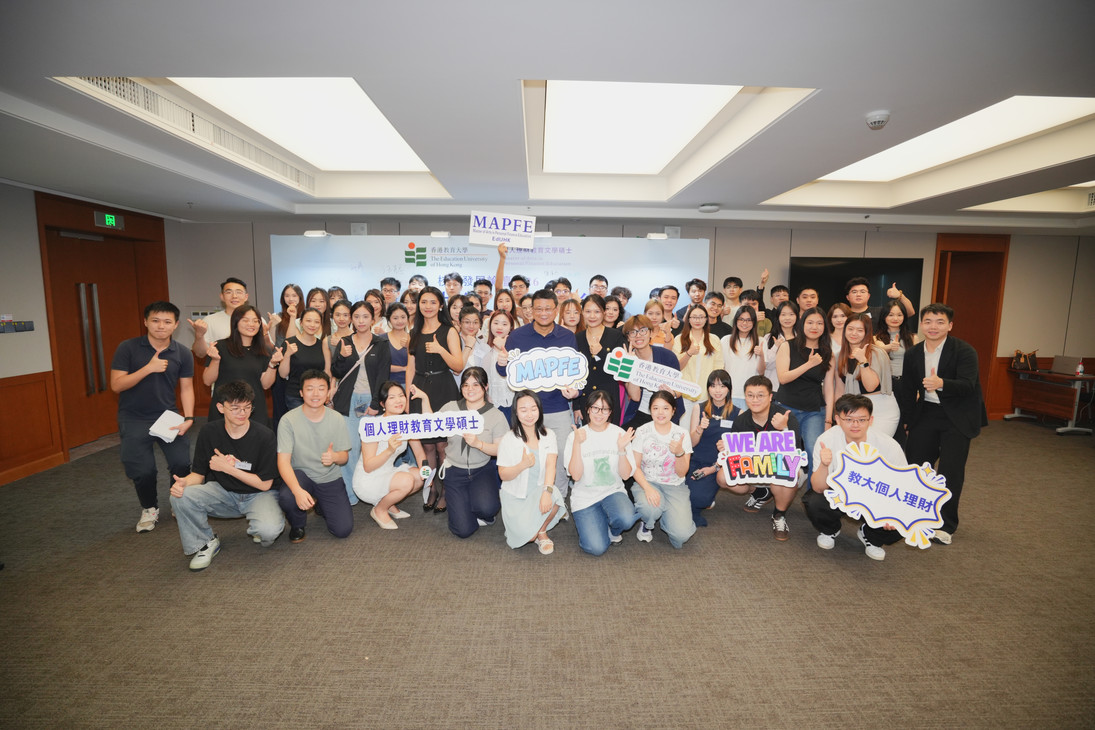
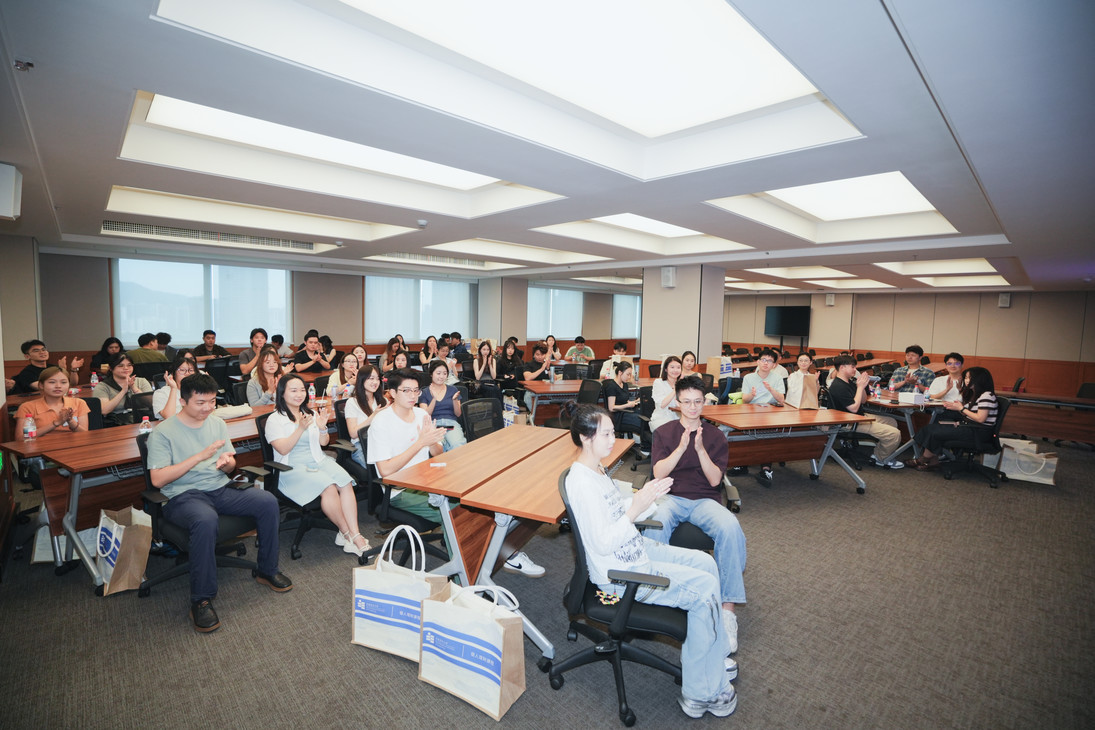
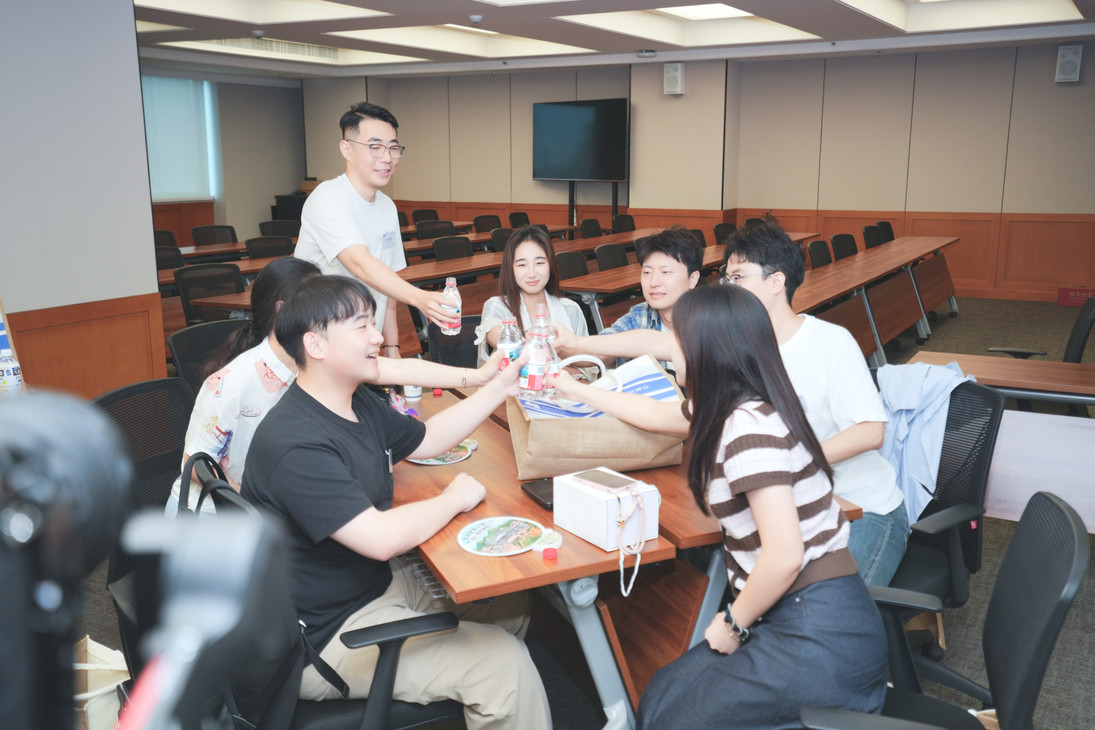
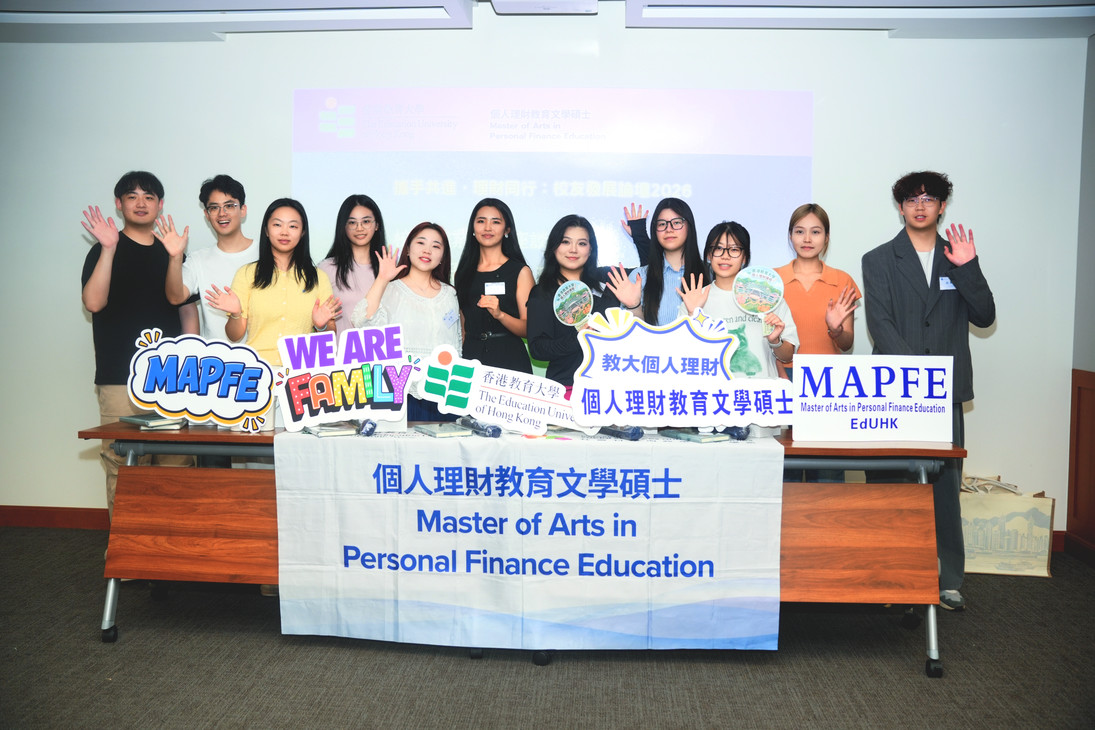
The master’s programme in Personal Finance hosted the Alumni Development Forum themed on "Reconnecting for a Personal Finance Future" in May 2026. The forum focused on professional development in financial services and personal finance. The Forum supported open discussion, where alumni shared industry updates and practical experience. The Forum also strengthened alumni’s professional networks and enabled them to meet fellow practitioners.


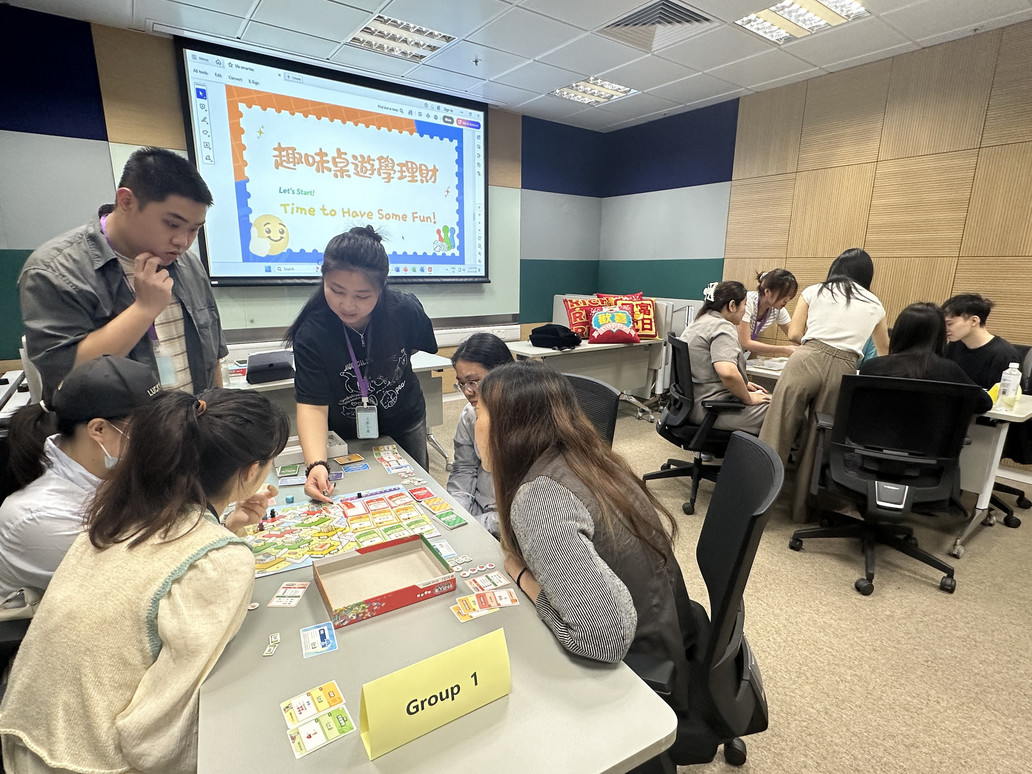
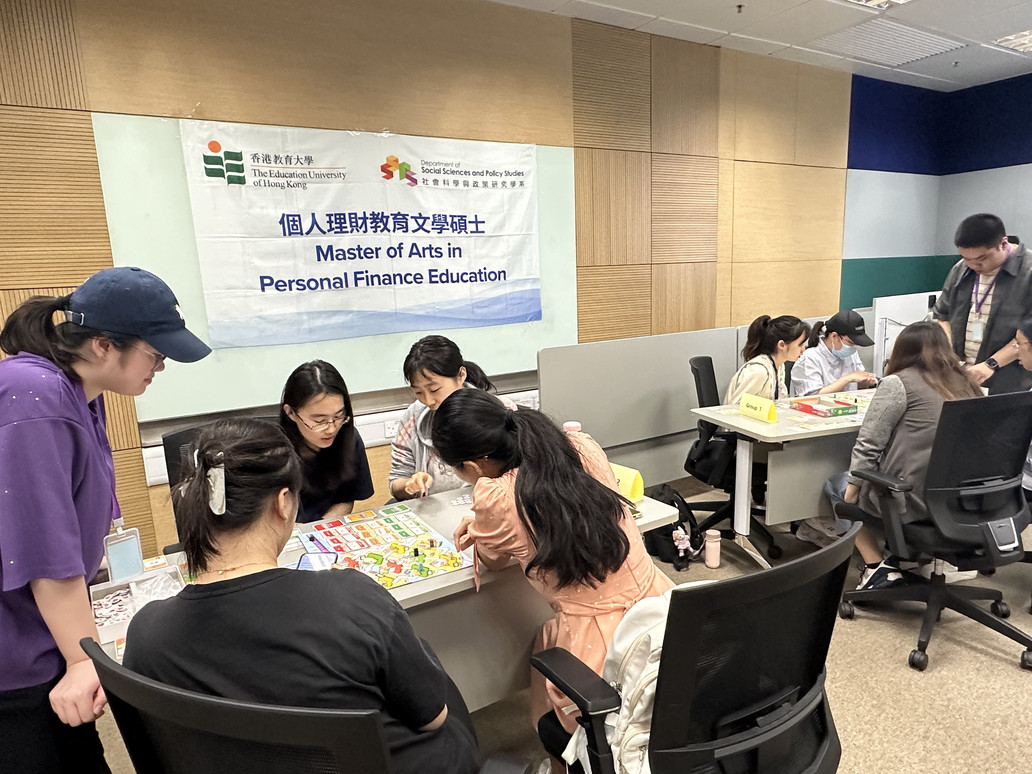
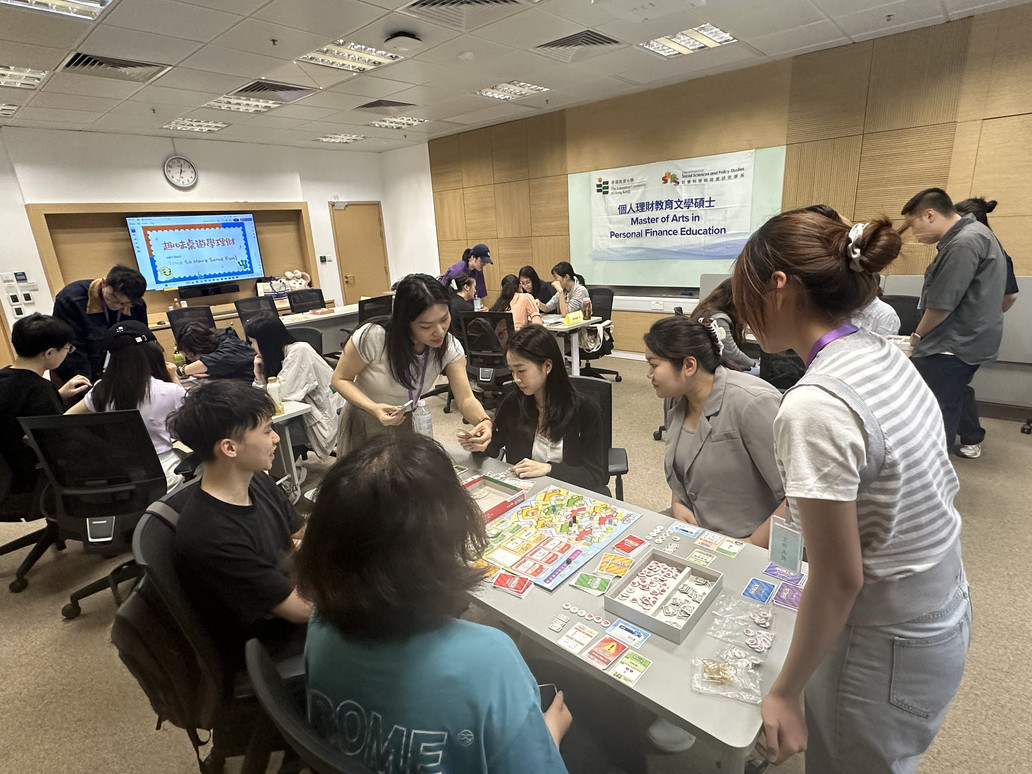
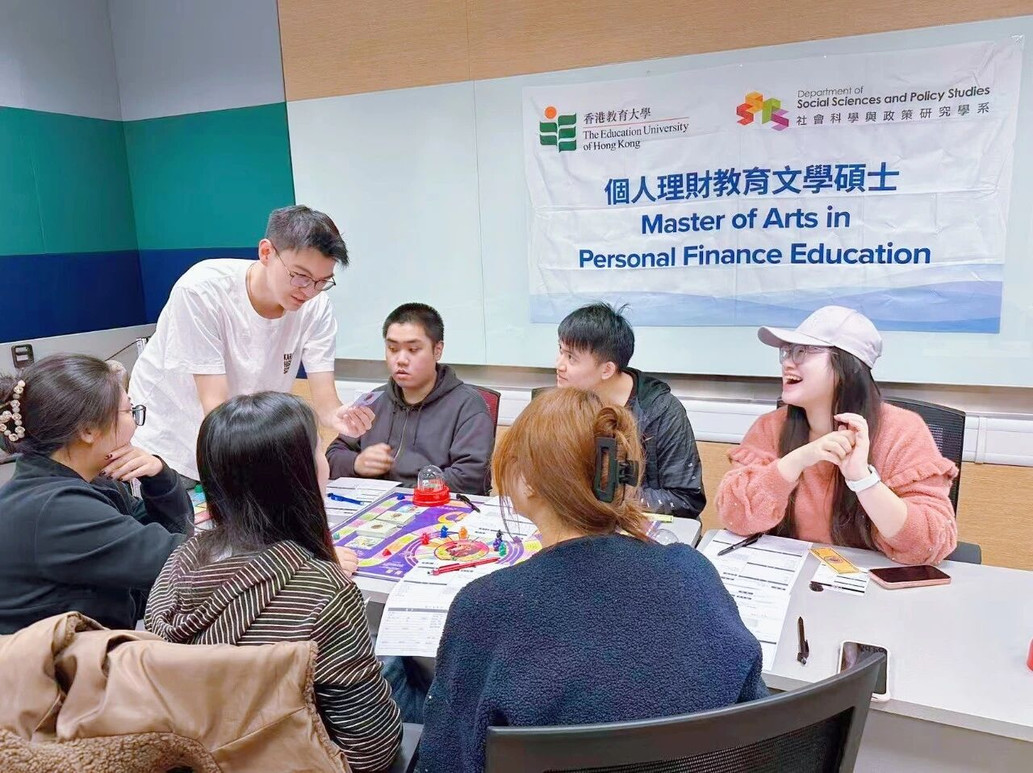
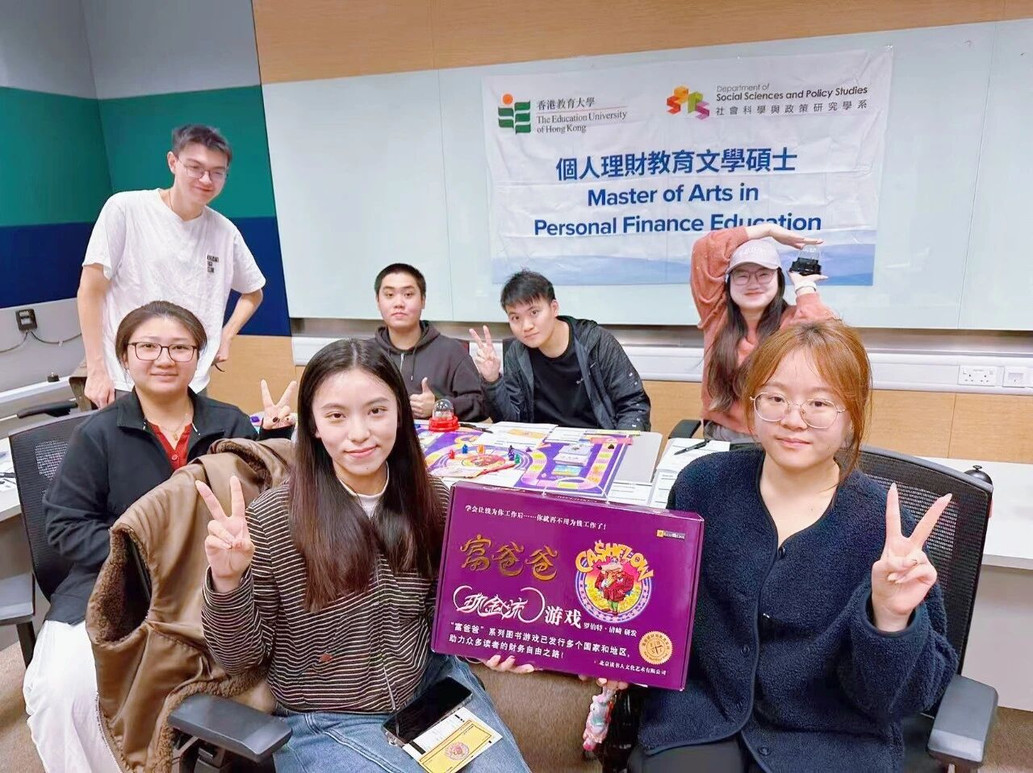
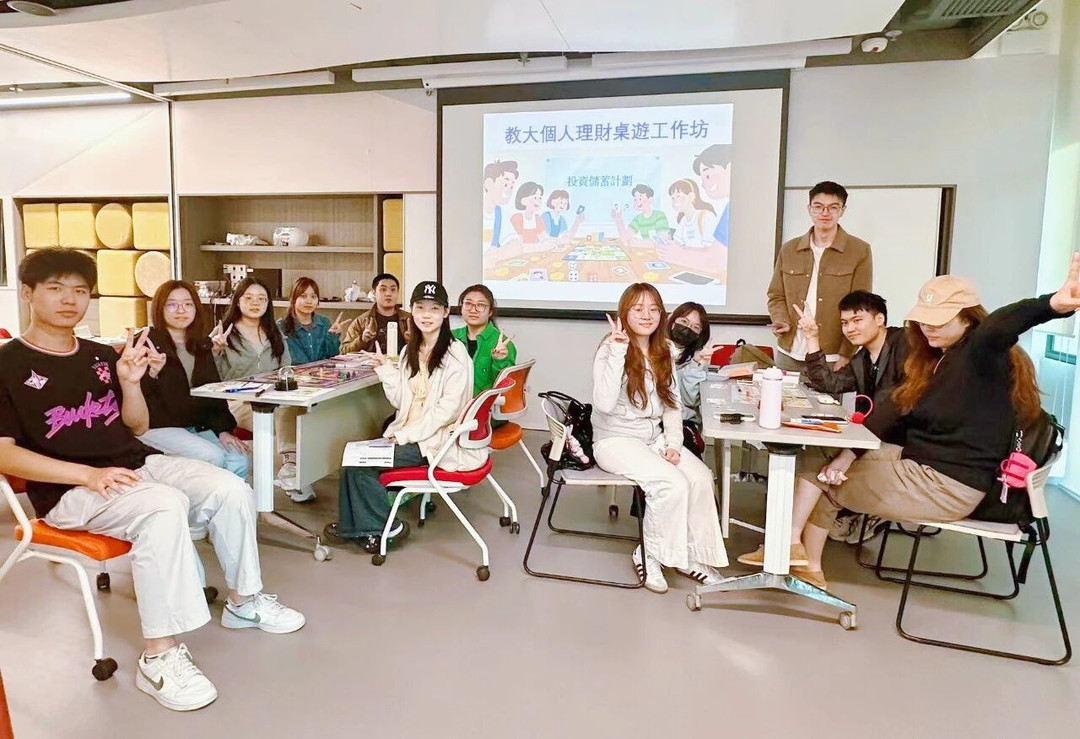
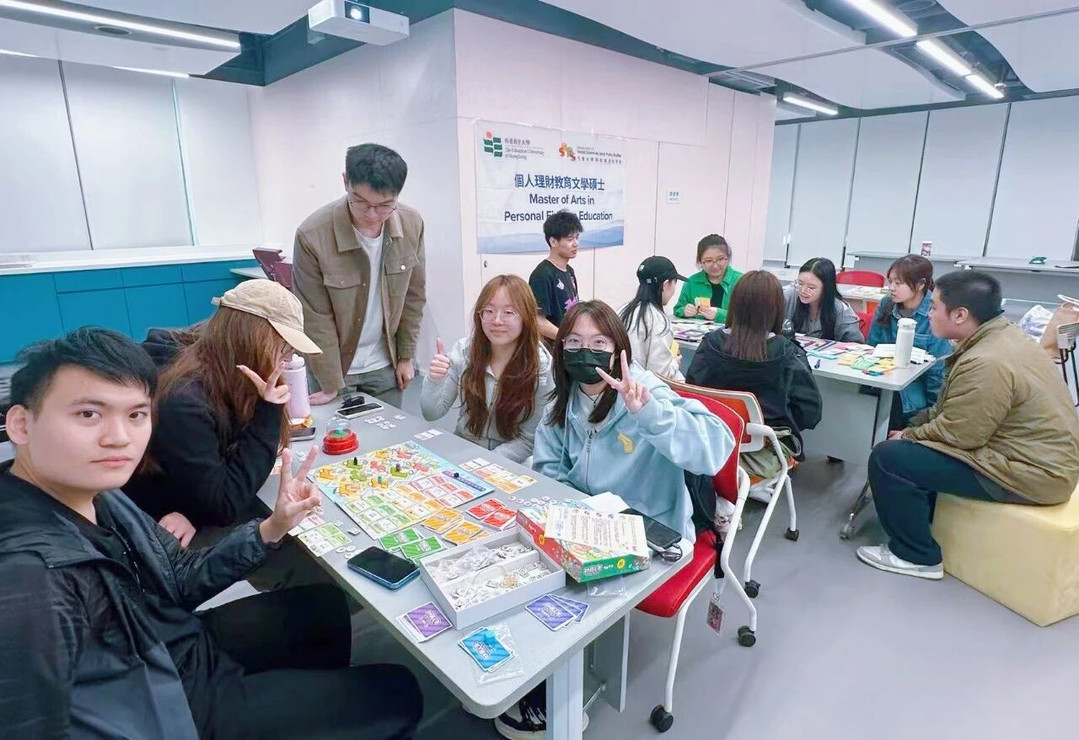
(Apr 2026) Personal Finance Programme’s Students Apply Knowledge in "Financial Board Game" Workshop

Students from the master’s programme in Personal Finance organised a "Financial Board Game" workshop on campus. Acting as facilitators, the Personal Finance students guided the EdUHK community to study some individual financial management tips through role-play scenarios and personal financial decision-making simulation. 

The community deepened the understanding of personal financial planning. From the perspective of Personal Finance students, this workshop was an arena that facilitated students in honing financial communication skills in a counselling context, and utilising engaging tools in the real-world practice.


(Apr 2026) Family Offices: Strategic Wealth Management

The Personal Finance Programme invited managers from WRISE, a full-service family office platform, to exchange with the students. This workshop discussed how Hong Kong based family offices navigate strategic wealth management, especially for Ultra-High and High Net Worth Individuals. Students were able to closely interact with the industry practitioners, and explore trending opportunities in the wealth management field.


(April 2026) Dialogue with Financial Leaders Series | Family Office Development in Hong Kong: Present and Future

This seminar invited Ms. Angel Chia, the Executive Director for Hong Kong Academy for Wealth Legacy, to bring unique insights into legacy building, next-generation leadership, and purposeful wealth stewardship.


(March 2026) Career Talk in Banking | Retail Wealth Management in Banking & Relationship Manager Trainee Opportunities

In this Career Talk, The Hong Kong Institute of Banking (HKIB) shared the comprehensive insights into the banking industry and its mission to nurture future banking talents. The session also featured a banker’s sharing on personal relationship management in retail banking, and an introduction to the Relationship Manager Trainee programme (RMT) at Nanyang Commercial Bank. Such career talks expanded personal finance students’ networks to identify the personal-finance-specific career opportunities.


(March 2026) Dialogue with Financial Leaders Series | Navigating Private Equity Markets

The Programme invited Mr. Danny Lee, a seasoned financial professional, to share insights from his extensive career in private equity. The session will span Venture Capital, Growth Equity, and Buyouts. With over 25 years of global experience, Mr. Lee will also facilitate a discussion on the practical challenges facing these investment sectors today.


(Mar 2026) Field Visit to Understand the ESG and Sustainable Practice in Business in Hong Kong

In March 2026, students from the master’s programme in Personal Finance went on an exciting field visit themed "ESG and Sustainable Business Practices". They explored innovative sustainability initiatives in the Northern Metropolis and visited Sino Inno Lab and The Spark. Through guided tours and an engaging workshop, students experienced immersive journeys into sustainable tech and innovation.

Personal Finance students also gained practical, real-world insights from a dialogue with a Sustainability & Innovation Manager at a renowned corporation in Hong Kong, learning how the company incorporates ESG and sustainability into its business operations.


(Mar 2026) EdUHK Alumni Homecoming Day 2026: "Financial Champions" Booth

Students from the Personal Finance Programmes organised a game-based booth during the EdUHK Alumni Homecoming Day 2026. The booth aimed to promote the principles of personal financial literacy among participants of all ages.


(Feb 2026) Outreach Workshop: Managing Money Wisely for a Cross-border Lifestyle

In Feb 2026, students from the master’s programme in Personal Finance led and designed a workshop, reaching out at The Chinese University of Hong Kong. This workshop enabled participants to understand the fundamental financial principles of university life and offered practical tips for managing money wisely, suited to a cross-border lifestyle.

Personal Finance students deepen their understanding of personal finance in a cross-border context through preparation for the workshop. They also learned how to implement a financial literacy enhancement proposal tailored to the target audience's specific needs.


(Feb 2026) Embracing Financial Well-being through Teambuilding

Personal Finance students engaged in financial board games to simulate real-world financial life cycles —from investment risks to retirement planning (e.g., MPF). Through these team-building activities, Personal Finance students not only learned money management tips but also experienced the art of financial counselling—a meaningful experience that embodied the spirit of "promoting financial well-being".​


(Feb 2026) Dialogue with Financial Executive at Ant Bank (HK) | Smart Banking in Action: How Digital Banks Are Redefining Finance in Hong

The Programme invited Ms Yvonne Leung, Chief Executive of Ant Bank (Hong Kong), to share with the Personal Finance students how digital banks are transforming Hong Kong’s financial landscape. This session provided a platform for students to observe financial and industrial trends and to expand their connections with leading industrial executives.


(Feb 2026) Understanding the Cross-Border Family Wealth Management and Legacy: Perspective from Legal Issues

To deepen Personal Finance students’ understanding of the legal issues in personal finance, the Programme invited two veteran solicitors familiar with judicial practice in Hong Kong and cross-border legal consulting to deliver a workshop. Students gained an understanding of comprehensive legal tools for personal and family wealth preservation, such as Trusts, Wills, Insurance, Pre-nuptial Agreements, and Post-Separation Accruals. This workshop also enhanced students' legal awareness and motivated them to build up legal capacity for financial planning.


(Jan 2026) Capital for Good: Trends in Asian Impact Investing and Philanthropy

Dr. Ruth A. Shapiro, the Co-Founder and Chief Executive of the Centre for Asian Philanthropy and Society (CAPS), delivered a seminar for the Personal Finance students and the EdUHK communities. The seminar unpacked key trends in impact investing and philanthropy across the region. The seminar also explored bridging wealth management with systemic social investment, inspiring students to think about the sustainability.


(Jan 2026) Personal Finance Ambassador Programme 2025/26: Getting EdUHK students Financially Ready for the Workforce Transition

"TP Boss", a student team from the master’s programme in Personal Finance, implemented a series of interactive games to enhance EdUHK students' financial literacy as they transition into the workforce. The initiative equipped the university community to navigate the financial shifts that accompany the transition from student life to the professional world. This initiative drove the Team to win the Bronze Award in the Personal Finance Ambassador Programme 2025/26.


(Nov 2025) Field Visit to Disneyland Promoting Students’ Mental Well-being

The Personal Finance programme organised a field visit to Disneyland in November 2025, themed on “Disney’s Foundations for Career Success”. The visit engaged students in backstage tours, scenario role-plays, personal strength discovery, peer appreciation games, and executive sharing, all guided by Disney cast members. Students learned to reframe setbacks with a positive problem-solving mindset and sustain calm, resilient well-being.


(Nov 2025) Field Visit to Ocean Park to Explore Sustainability in Tourism

Students from the master’s programme in Personal Finance visited Ocean Park Hong Kong to explore the sustainable practice in tourism. Through a series of engaging workshops, students witnessed real-world scenarios in business sustainability.


(Nov 2025) Pioneer in Financial Literacy Education in China Shared the Insight on “Financial Literacy in the AI Era”

On 13 November 2025, the MA(PFE) Programme invited Professor Song SU, Professor and PhD supervisor at the Business School of Beijing Normal University (BNU), to deliver a seminar on “Financial Literacy in the AI Era”. During the seminar, Professor Su discussed the role of AI in enhancing financial education, the impact of financial literacy on AI application usage, and the challenges of AI in financial literacy. Through dialogue with Professor Su, a pioneer in financial literacy education in China, MA (PFE) students broadened their academic horizons in personal finance and financial education.


(Oct 2025) Measuring Financial Literacy of Retail Investors: An Econometrics Approach

On October 30, 2025, the Master of Arts in Personal Finance Education MA(PFE) Programme hosted an academic seminar titled “Measuring Financial Literacy of Retail Investors.” Professor LI Youwei, Professor of Finance at the University of Hull Business School (UK), was invited as the speaker to share his latest research. His work focuses on constructing financial literacy indicators through the textual analysis of social media data. During the lecture, Professor LI introduced a novel method for measuring retail investors’ financial literacy, developed using this textual analysis approach. This provided MA(PFE) students with fresh perspectives in the fields of financial econometrics and behavioural finance.


(Oct 2025) Understand the Blockchain and DeFi at the Guest Lecture

On October 22, 2025, the Master of Arts in Personal Finance Education [MA(PFE)] Programme hosted a financial workshop titled “Beyond Banking: New Frontiers in Decentralized Finance.” The event featured Professor Eric Chiang, Venture Partner at WAGMI Ventures, as the speaker. He provided an in-depth analysis of the industrial trends and the future prospects of blockchain technology and decentralized finance (DeFi). During the workshop, Professor Eric provided MA(PFE) students with both theoretical and practical industry insights, helping them understand how decentralized finance is progressively driving innovation and development within the financial sector.


(Oct 2025) Understanding the Arab-China Business from a Cultural Perspective

On 31 October 2025, Lord Edwin E. Hitti, President of The Arab Chamber of Commerce & Industry (ArabCham), shared his insights on Arab-China Business with the students. Lord Hitti explored the profound cultural distinctions between the Arab world and China that directly impact business and finance. “For financiers and entrepreneurs, understanding these nuances is not merely cultural appreciation but a strategic commercial imperative.” This session provided key insights into leveraging cultural intelligence to build sustainable and profitable commercial bridges between these influential economic spheres.


(Oct 2025) Special Visit to the Eco Expo Asia 2025: Exploring the New Trend in Green Finance and Green Technology

On October 28 2025, MA(PFE) Programme led students to a special visit to the Eco Expo Asia 2025. During the Expo, students explored the Green and Sustainable Industries of Hong Kong and the worldwide, including the latest green technologies in energy, green buildings, green finance, and ESG services. Through the guided tour of the Expo and in-depth interactions with exhibitors from the sustainable industries, students realised how to cultivate forward-thinking perspectives in the financial industry during the global move toward carbon neutrality. This Expo also serves as a window for students to understand Hong Kong’s role in promoting global sustainability.


(Oct 2025) Dialogue with Professor Mahesh Harilela: The Family Blueprint: Sustaining Legacy, Advancing Hong Kong

On 22 October 2025, EdUHK held a distinguished lecture entitled ‘Family Blueprint: Sustaining Legacy, Advancing Hong Kong’. The Lecture featured Professor Mahesh Harilela, Family Council Convenor of Harilela Group Ltd., a renowned entrepreneur and philanthropist, who shared his extensive experience in family governance, business succession, and sustainable development. During the lecture, Professor Harilela highlighted the strategic significance of family offices within Hong Kong’s financial ecosystem, noting their importance in attracting international capital and talent. He also shared how family enterprises can preserve tradition while embracing change to foster sustainable social and economic development.

During the interactive session, students from Bachelor of Arts (Honours) in Personal Finance and Master of Arts in Personal Finance Education programmes actively engaged with Professor Harilela. They discussed the future of family offices in Hong Kong and explored career pathways in the wealth management profession. The vibrant atmosphere reflected the strong interest in the topic and the value of direct dialogue with industry leaders.

Read More

(Oct 2025) Trends and Career Opportunities in ESG and Green Finance: Hong Kong Insight from Financial Elite

Mr Paul Pong, Founder and CEO of The Institute of ESG & Benchmark (IESGB), shared insights on the Environmental, Social and Governance (ESG) practices in Hong Kong, and discussed the historical development and future vision of the sustainable disclosure pathway. Moreover, Mr Paul Pong engaged students in career development in the ESG industry and explained the importance of achieving Certified ESG Professional (CESGP) for career advancement.


(Oct 2025) Guangzhou Institute of GBA Experts Share Trends and Prospects of Science and Technology Innovation Investment in the GBA

On October 15, 2025, the Programme invited Dr. Jiang Han, a researcher from the Guangzhou Institute of GBA, to conduct a financial research seminar. Dr. Jiang introduced the development progress of the GBA to students. Combined with Think Tank, she analysed the bottlenecks and challenges of the GBA in technological innovation and industrial development, and discussed the implementation pathways and effectiveness of science and technology policies in upgrading industries. Additionally, she shared methodologies and techniques for drafting policy analysis reports. During the seminar, students recognised the core research competency of Tink Tank, which means transforming complex policy issues into clear, implementable policy suggestions.


(Sept 2025) IFPHK launches Financial Planning Youth Elite Program to support MA(PFE) students’ professional development in financial planning

On 18 September 2025, The Institute of Financial Planners of Hong Kong (IFPHK) delivered a workshop on “Wealth Management Industry and Career Paths for Financial Planners” for the students from the Personal Finance programmes. During the workshop, Dr Paris Yeung, CEO of IFPHK, explored the growing demand for financial planners and career opportunities in wealth management with the students. Meanwhile, the workshop also introduces the exclusive Financial Planning Young Elite Program for MA(PFE) students, which is a customised scheme launched by IFPHK to support MA(PFE) students’ professional success in financial planning and financial services.


Past activities:

2024/25

2023/24

2022/23

2021/22


CAREER PROSPECTS

Graduates are expected to pursue a career in financial services, including banking, securities, credit management, and private equity. The curriculums will also equip the participants for entering some trending financial fields such as private wealth management, family office, fintech, green and sustainable finance, ESG consulting, etc.

Graduates with strong research capacity could also pursue further studies or academic careers in finance or business studies.

PROFESSIONAL RECOGNITION

Eligible MA(PFE) graduates are able to apply for modular exemptions or partial exemptions when attending specific financial certifications in Hong Kong, such as:

Certifying Institution Certification Exemption Summary
The Institute of Financial Planners of Hong Kong (IFPHK) Certified Financial Planner (CFP)
  • Eligible for the fast-tracking CFP certification (exemption from 3 CFP courses and a foundational level examination);
  • Completion of “BUS6074 Comprehensive Practical Financial Planning” will lead to eligibility for exemption from Course 4: Financial Planning Practice of the CFP Certification.
The Hong Kong Institute of Bankers (HKIB) Certified Banker (Stage I & Stage II)

Modular exemption from:

  • Risk Management of Certified Banker (Stage I); and
  • Corporate Finance Services of Certified Banker (Stage II).
Enhanced Competency Framework on Fintech (ECF-FinTech) Modular exemption from Module 2 Banking and Risk Essentials.
Enhanced Competency Framework on Retail Wealth Management (ECF-RWM) Modular exemption from Module 2 Investment Planning.
Institute of Financial Technologists of Asia (IFTA) Certified Financial Technologist (CFT) Eligible for the exemptions of Level 1 of CFT Programme.

Prof YU Wai Mui Christina, Dr TAN Weiqiang, EdUHK researchers achieve accolades in diverse fields, China Daily (4 Dec 2024)
https://www.chinadailyhk.com/hk/article/599342

Prof YU Wai Mui Christina, Professor Christina Yu on HKJC's financial literacy programme, RTHK (21 Nov 2024)
https://www.rthk.hk/radio/radio3/programme/backchat/episode/989132

譚偉強,《提升基層金融素養 推動共同富裕》,刊於《文匯報》,2024年6月15日。
https://www.wenweipo.com/a/202406/15/AP666ca396e4b05df3a51f7909.html

譚偉強、麥萃才,《增強理財知識 做好退休打算》,刊於《文匯報》,2024年6月7日。
https://www.wenweipo.com/a/202406/07/AP66621855e4b0a7ef3f0436a1.html

譚偉強,《打造國際人才交流高端平台》,刊於《文匯報》,2024年5月27日。
https://www.wenweipo.com/a/202405/27/AP66539778e4b0bd97947372c9.html

譚偉強,《家族辦公室專才培養宜提速》,刊於《文匯報》,2024年4月25日。
https://www.wenweipo.com/a/202404/25/AP66296739e4b01def1fdfece1.html

譚偉強,《教基層學用手機支付 縮小數字鴻溝》,刊於《文匯報》,2024年4月9日。
https://www.wenweipo.com/a/202404/09/AP66144f65e4b009ba85365621.html

教大碩士結合金融和理財教育元素 畢業生運用所學 助人自助出路廣
(明報JUMP, 24 Jan 2024)
https://jump.mingpao.com/career-news/edu-career-supplement-2024/%e6%95%99%e5%a4%a7%e7%a2%a9%e5%a3%ab%e7%b5%90%e5%90%88%e9%87%91%e8%9e%8d%e5%92%8c%e7%90%86%e8%b2%a1%e6%95%99%e8%82%b2%e5%85%83%e7%b4%a0-%e7%95%a2%e6%a5%ad%e7%94%9f%e9%81%8b%e7%94%a8%e6%89%80%e5%ad%b8/

譚偉強,《擺脫跨代貧窮 需「學」「研」深度參與》,刊於《明報》,2022年11月17日。
https://news.mingpao.com/pns/%E8%A7%80%E9%BB%9E/article/20221117/s00012/1668618522740/

Learn to be a money sage
(英文虎報 The Standard, 26 Jan 2021)
https://www.thestandard.com.hk/section-news/fc/4/226921/

大學生「碌」卡是精明還是會惹上一身債?
(信報財經新聞, 朱文英博士, 21 Oct 2020)
https://www1.hkej.com/dailynews/culture/article/2610991/

教育小朋友理財 延遲滿足換取更大獎勵
(信報財經新聞, 朱文英博士, 15 Sept 2020)
https://www1.hkej.com/dailynews/culture/article/2581695/

教大明年首辦理財教育碩士
(星島日報, 3 Sept 2020)
https://std.stheadline.com/daily/article/2273209/

教大明年辦理財碩士課 校長張仁良:樂意客串
(明報, 3 Sept 2020)
https://news.mingpao.com/pns/%E6%95%99%E8%82%B2/article/20200903/s00011/1599070176386/

【中環解密】教大首辦理財碩士課程 張仁良或客串
(信報財經新聞, 3 Sept 2020) https://hk.news.yahoo.com/%E4%B8%AD%E7%92%B0%E8%A7%A3%E5%AF%86-%E6%95%99%E5%A4%A7%E9%A6%96%E8%BE%A6%E7%90%86%E8%B2%A1%E7%A2%A9%E5%A3%AB%E8%AA%B2%E7%A8%8B-%E5%BC%B5%E4%BB%81%E8%89%AF%E6%88%96%E5%AE%A2%E4%B8%B2-193100407.html

教大明年開辦個人理財教育碩士課程 校長張仁良或客串上陣授課
(hket.com, 2 Sept 2020)
https://topick.hket.com/article/2742209

講求事實數據的理財教育
(信報財經新聞, 姚偉梅教授, 8 Jun 2019)
https://www1.hkej.com/dailynews/culture/article/2157737/

JUPAS Code
N/A
Programme Code
A1M101
Abbreviated Programme Title
MA (PFE)
Medium of Instruction
English
Programmes & Courses Tags
Ssps Image
cover photo PFA 2023 1200 900.png
Position
Programme Leader
Name
Dr TAN Weiqiang
Email
wqtan@eduhk.hk
Position
Admission Enquiries
Email
tpgadmission@eduhk.hk
Telephone
(852) 2948 6886
Position
Programme Enquiries
Email
mapfe@eduhk.hk
Telephone
2948 8727
Study Mode
Study Period
Study Period
Programme Code
C2M032
Remark: The Master of Arts in Personal Finance Education is retitled to Master of Arts in Personal Finance from 2027/28.

Master of Public Policy and Management

JUPAS Code
N/A
Programme Code
A1M082
Abbreviated Programme Title
MPPM
Medium of Instruction
English
Programmes & Courses Tags
Ssps Image
BPSM or MPPM.jpg
Position
Programme Leader
Name
Dr VYAS, Lina
Email
vyaslina@eduhk.hk
Telephone
(852) 2948 7115
Position
Enquiry (Admission)
Email
tpgadmission@eduhk.hk
Telephone
(852) 2948 6886
Position
Enquiry (Programme)
Link Name
Submit Your Enquiry
Email
mppm@eduhk.hk
Telephone
(852) 2948 7845
Download Leaflet
Title Color
Study Mode
Study Period

Courses

Courses


INTERNATIONAL RECOGNITION

  • The Hong Kong Institute of Human Resource Management (HKIHRM) - Partially Endorsed;
  • Network of Schools of Public Policy, Affairs, and Administration (NASPAA) - Member.


APPLICATION FEE

Local Applicants: HK$300 (For January 2027 Entry); HK$400 (For September 2027 Entry onwards) 

Non-local Applicants: HK$400 (For January 2027 Entry); HK$500 (For September 2027 Entry onwards)


TUITION FEE

For January 2027 Entry: HK$151,110 (Local Applicants); HK$188,888 (Non-local Applicants)

For September 2027 Entry: HK$208,000


DISCLAIMER

The default mode of teaching of all classes will be in-person on campus using face-to-face mode. Students who are currently not in Hong Kong are advised to make their travel plan as early as possible.

Classes in the same or different semester(s) may be scheduled on weekday daytime/evenings, weekends and/or during long holidays at the Tai Po Campus / Tseung Kwan O Study Centre / North Point Study Centre / Kowloon Tong Satellite Study Centre and/or other locations as decided by the University.

Every effort has been made to ensure the accuracy of the information contained in this website. Changes to any aspects of the programmes may be made from time to time as due to change of circumstances and the University reserves the right to revise any information contained in this website as it deems fit without prior notice. The University accepts no liability for any loss or damage arising from any use or misuse of or reliance on any information contained in this website.

Any aspect of the courses and course offerings (including, without limitation, the contents of the course and the manner in which the course is taught) may be subject to change at any time at the sole discretion of the University if necessary. Without limiting the generality of the University’s discretion to revise the courses and course offerings, it is envisaged that changes may be required due to factors including staffing, enrolment levels, logistical arrangements, curriculum changes, and other factors caused by change of circumstances. Tuition fees, once paid, are non-refundable. 

The University is committed to uphold the educational quality and standard of the programmes it offers. The University, being funded by the University Grants Committee (UGC), is one of the nine self-accrediting institutions in Hong Kong. In addition, the quality of the educational experience in all programmes offered by the UGC-funded universities is subject to the quality assurance process administered by the Quality Assurance Council of the UGC.

Important Notes for Students from Chinese Mainland on Overseas Credential Evaluation (國(境)外學歷學位認證)

  • Students who have fulfilled the programme requirements will be conferred the degree upon the approval of the University's Academic Board. The University bears no responsibility for the evaluation of its degrees outside of Hong Kong. Students are advised to consult with the relevant authority(ies) for the prevailing rules/regulations.
     

  • Individuals who would seek qualification certification in Chinese Mainland after graduation should contact the Chinese Service Centre for Scholarly Exchange (CSCSE) 中國(教育部) 留學服務中心 (https://www.cscse.edu.cn) for updated details.
     

  • The certification in Chinese Mainland is an independent process from the conferral of academic qualification in Hong Kong by the University. For the avoidance of doubt, no warranties are given in respect of individual graduate's qualification certification or recognition in Chinese Mainland or any other professional qualification or license outside Hong Kong.
     

  • CSCSE  takes a very prudent approach in evaluating each application, including the students' residential period in Hong Kong during the entire study period. When evaluating graduates' credentials, the full border entry and exit records of individual applicants will be examined.
     

  • Students who would pursue credential recognition should be aware that short stays in Hong Kong during the study period may not fulfil the CSCSE residential requirements, leading to possible uncertainty and risks to their credential recognition.
     

  • Students are seriously advised to consider the above when making personal plans, such as accommodation and travel plans from Hong Kong, etc. and make necessary arrangements where appropriate. 
     

  • It is the responsibility of the students to be familiar with and comply with the University regulations and guidelines governing the Taught Postgraduate Programmes. Students should refer to the Graduate School website for the General Academic Regulations and the Code of Practice for Taught Postgraduate Programmes for details.
     

  • Students should consult with CSCSE if they have any enquiries.


Download Leaflet (Chinese)

Master of International Relations and Development

JUPAS Code
N/A
Programme Code
A1M096
Abbreviated Programme Title
MIRD
Medium of Instruction
English
Programmes & Courses Tags
Ssps Image
MIRD.jpg
Position
Enquiry (Admission)
Email
tpgadmission@eduhk.hk
Telephone
(852) 2948 6886
Position
Enquiry (Programme)
Link Name
Submit Your Enquiry
Email
mird@eduhk.hk
Telephone
(852) 2948 7845
Download Leaflet
MIRD-Eng-2.pdf (1.71 MB)
Study Mode
Study Period

Courses

Note: The offering of elective courses and the quota offered is subject to the Department’s decision and students’ enrolment. It may vary in each academic year.


Download Leaflet (Chinese)
MIRD-Chi.pdf (1.74 MB)
Subscribe to Full-time